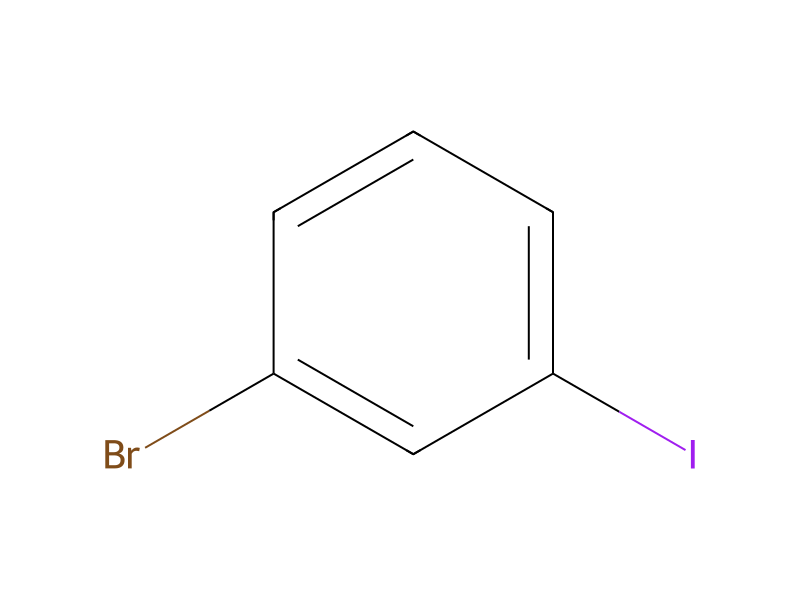
[CH:1]1[C:18]2[C:17]3[C:16]4[CH:15]=[CH:14][CH:13]=[CH:12][C:11]=4[CH:10]=[CH:9][C:8]=3[CH:7]=[C:6](B(O)O)[C:5]=2[CH:4]=[CH:3][CH:2]=1.[Br:22][C:23]1[CH:24]=[C:25](I)[CH:26]=[CH:27][CH:28]=1.C(=O)([O-])[O-].[Na+].[Na+]>C1C=CC([P]([Pd]([P](C2C=CC=CC=2)(C2C=CC=CC=2)C2C=CC=CC=2)([P](C2C=CC=CC=2)(C2C=CC=CC=2)C2C=CC=CC=2)[P](C2C=CC=CC=2)(C2C=CC=CC=2)C2C=CC=CC=2)(C2C=CC=CC=2)C2C=CC=CC=2)=CC=1.C1(C)C=CC=CC=1>[Br:22][C:23]1[CH:24]=[C:25]([C:3]2[CH:2]=[CH:1][C:18]3[C:17]4[C:16]5[CH:15]=[CH:14][CH:13]=[CH:12][C:11]=5[CH:10]=[CH:9][C:8]=4[CH:7]=[CH:6][C:5]=3[CH:4]=2)[CH:26]=[CH:27][CH:28]=1Under an argon atmosphere, 3.26 g of the benzo[c]phenanthrene-5-boronic acid obtained, 2.83 g of 3-bromoiodobenzene, 0.231 g of tetrakis(triphenylphosphine)palladium(0), 40 mL of toluene and 20 mL of a 2M aqueous solution of sodium carbonate were placed in a flask. The resultant was refluxed with stirring for 8 hours. After cooling to room temperature, the reaction solution was extracted with toluene. An aqueous phase was removed and an organic phase which had been separated was washed with water and saturated brine sequentially, and then dried with magnesium sulfate. After the magnesium sulfate was filtered out, the organic phase was concentrated. The resulting residue was purified by means of silica gel column chromatography, whereby 3.64 g (yield: 95%) of 10-(3-bromophenyl)benzo[c]phenanthrene was obtained.