Reaction equation

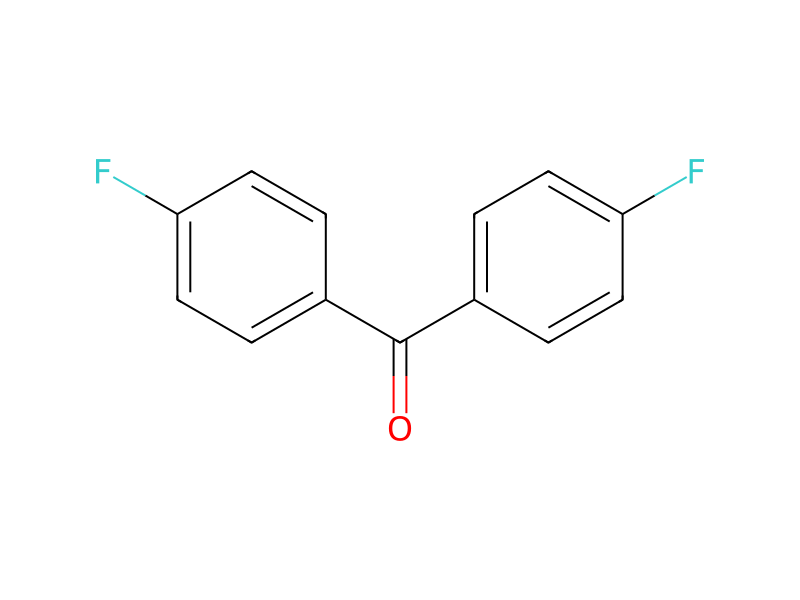
[NH2:1][C:2]1[C:3](=[O:9])[NH:4][C:5](=[O:8])[NH:6][CH:7]=1.[F:10][C:11]1[CH:25]=[CH:24][C:14]([C:15]([C:17]2[CH:22]=[CH:21][C:20]([F:23])=[CH:19][CH:18]=2)=O)=[CH:13][CH:12]=1>CN1CCCC1=O.C1(N2CCCC2=O)CCCCC1>[NH:6]1[CH:7]=[C:2]([N:1]=[C:15]([C:14]2[CH:24]=[CH:25][C:11]([F:10])=[CH:12][CH:13]=2)[C:17]2[CH:18]=[CH:19][C:20]([F:23])=[CH:21][CH:22]=2)[C:3](=[O:9])[NH:4][C:5]1=[O:8]Participants
4
Reactant 2

Product 1

Reagents, catalysts & solvents 1

Conditions
- Temperature
- 180 °C
Procedure
In a round bottom flask equipped with an overhead stirrer, 1.16 grams (0.009 mole) of 5-aminouracil was charged along with 6 grams (0.027 mole) of 4,4′-difluorobenzophenone and a N-methylpyrrolidone/N-cyclohexylpyrrolidone solvent mixture (50/50, 20 milliliters). The reaction mixture was then heated to 180° C. for 3 days. A charge of hexanes (100 milliliters) was added to fully induce precipitation, and the solid was isolated by filtration and twice recrystallized from isopropanol. The product was rinsed with isopropanol, suction dried, and vacuum dried in an oven overnight.
Workup
- customIn a round bottom flask equipped with an overhead stirrer
- additionwas added to fully induce precipitation
- customthe solid was isolated by filtration
- customtwice recrystallized from isopropanol
- washThe product was rinsed with isopropanol, suction
- customdried
- customvacuum dried in an oven overnight
Sources & evidence
- ORD record
- ord-44cd58c4353b4c54a50e189ea613d1de
- Source dataset
- uspto-grants-2013_12
- Patent number
- US08604135B2
Linked notes
Loading…