HomeMCPWorkbenchSkills
HomeWorkbenchNotificationsMe
llms.txt · MCP GuidePrivacy Policy · Terms of Service · Supportv1.8.0
  1. Home
  2. /Reaction

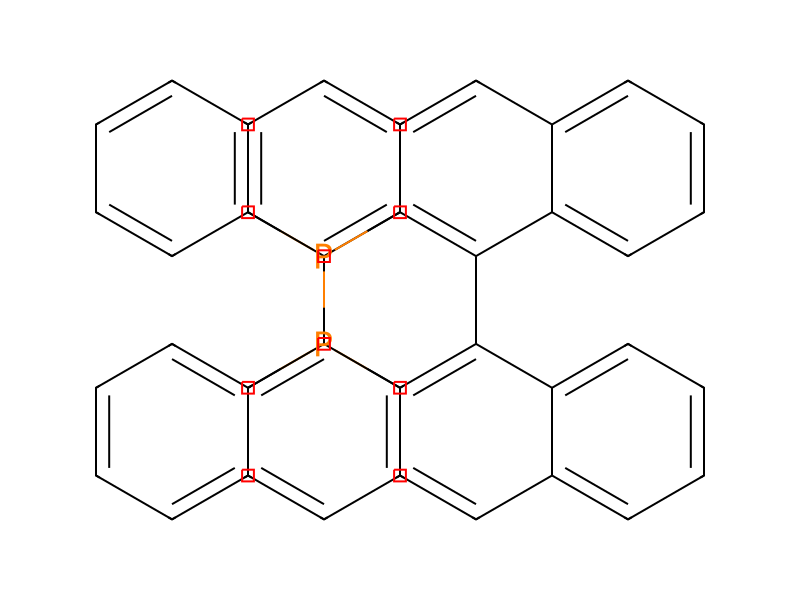
Binap, (A+-)- → (3S)-tert-Butyl 3-(1-(Tetrahydro-2H-pyran-2-yl)-1H-indazol-5-ylamino)piperidine-1-carboxylate

HRID 1912018
Notes
Print preview

Reaction equation

HRID 1912018 reaction equation
Br[C:2]1[CH:3]=[C:4]2[C:8](=[CH:9][CH:10]=1)[N:7]([CH:11]1[CH2:16][CH2:15][CH2:14][CH2:13][O:12]1)[N:6]=[CH:5]2.[NH2:17][C@H:18]1[CH2:23][CH2:22][CH2:21][N:20]([C:24]([O:26][C:27]([CH3:30])([CH3:29])[CH3:28])=[O:25])[CH2:19]1.C1C=CC(P(C2C(C3C(P(C4C=CC=CC=4)C4C=CC=CC=4)=CC=C4C=3C=CC=C4)=C3C(C=CC=C3)=CC=2)C2C=CC=CC=2)=CC=1.CC(C)([O-])C.[Na+]>C1C=CC(/C=C/C(/C=C/C2C=CC=CC=2)=O)=CC=1.C1C=CC(/C=C/C(/C=C/C2C=CC=CC=2)=O)=CC=1.C1C=CC(/C=C/C(/C=C/C2C=CC=CC=2)=O)=CC=1.[Pd].[Pd]>[O:12]1[CH2:13][CH2:14][CH2:15][CH2:16][CH:11]1[N:7]1[C:8]2[C:4](=[CH:3][C:2]([NH:17][C@H:18]3[CH2:23][CH2:22][CH2:21][N:20]([C:24]([O:26][C:27]([CH3:30])([CH3:29])[CH3:28])=[O:25])[CH2:19]3)=[CH:10][CH:9]=2)[CH:5]=[N:6]1
ParticipantsConditionsProcedureWorkupSources & evidenceReaction notes

Participants

6

Reactant 4

HCID 634876Binap, (A+-)-HCID 1501975tert-butyl (3S)-3-aminopiperidine-1-carboxylateHCID 23676156Sodium t-butoxideHCID 534338265-bromo-1-(oxan-2-yl)-1H-indazole

Product 1

HCID 66760812(3S)-tert-Butyl 3-(1-(Tetrahydro-2H-pyran-2-yl)-1H-indazol-5-ylamino)piperidine-1-carboxylateYield 81%

Reagents, catalysts & solvents 1

HCID 9811564Bis(dibenzylideneacetone)palladiumCatalyst

Conditions

Temperature
55 °C

Procedure

A 500 mL round bottom flask with a stirbar was charged with 5-bromo-1-(tetrahydro-2H-pyran-2-yl)-1H-indazole (28.0 g, 0.0996 mol, 1.00 eq), (S)-3-amino-Boc-piperidine (21.75 g, 0.109 mol, 1.09 eq), tris(dibenzylideneacetone)dipalladium (4.75 g, 5.18 mmol, 0.052 eq), racemic BINAP (7.44 g, 12.0 mmol, 0.12 eq), and sodium tert-butoxide (28.7 g, 0.299 mol, 3.00 eq). The flask containing the solids was then evacuated and back-filled with nitrogen three times to degas. Pyridine (200 mL) was then added, and the flask was again purged three times with vacuum and nitrogen. The dark greenish mixture was then stirred at 55° C. overnight under a nitrogen atmosphere. In the morning, the reaction was cooled to room temperature, diluted with 250 mL EtOAc, washed three times with 250 mL portions of 10% NaHSO4, and the organic phase was evaporated. The residue was dissolved in toluene and loaded onto a silica column that had been packed with heptane. The column was washed with 5 column volumes of heptane, after which the desired product was eluted with EtOAc/heptane, to provide the title compound as a pale yellow foam (2.4 g, 81%).

Workup

  1. additionThe flask containing the solids
  2. customwas then evacuated
  3. additionback-filled with nitrogen three times
  4. customto degas
  5. additionPyridine (200 mL) was then added
  6. customthe flask was again purged three times with vacuum and nitrogen
  7. temperatureIn the morning, the reaction was cooled to room temperature
  8. additiondiluted with 250 mL EtOAc
  9. washwashed three times with 250 mL portions of 10% NaHSO4
  10. customthe organic phase was evaporated
  11. dissolutionThe residue was dissolved in toluene
  12. washThe column was washed with 5 column volumes of heptane
  13. washafter which the desired product was eluted with EtOAc/heptane

Sources & evidence

ORD record
ord-ab3a47a2f86045b1a86d1c359ad24838
Source dataset
uspto-grants-2013_12
DOI
10.6084/m9.figshare.5104873.v1
Patent number
US08604218B2

Reaction notes

Loading…

On this pageParticipantsConditionsProcedureWorkupSources & evidenceReaction notes