HomeMCPWorkbenchSkills
HomeWorkbenchNotificationsMe
llms.txt · MCP GuidePrivacy Policy · Terms of Service · Supportv1.8.0
  1. Home
  2. /Reaction

Methanol → 1-(2-Bromo-3-hydroxyphenyl)ethanone

HRID 1927301
Notes
Print preview

Reaction equation

HRID 1927301 reaction equation
[Br:1][C:2]1[C:7]([O:8]C)=[CH:6][CH:5]=[CH:4][C:3]=1[C:10](=[O:12])[CH3:11].BrP(Br)Br.CO>C(Cl)Cl>[Br:1][C:2]1[C:7]([OH:8])=[CH:6][CH:5]=[CH:4][C:3]=1[C:10](=[O:12])[CH3:11]
ParticipantsConditionsProcedureWorkupSources & evidenceReaction notes

Participants

5

Reactant 3

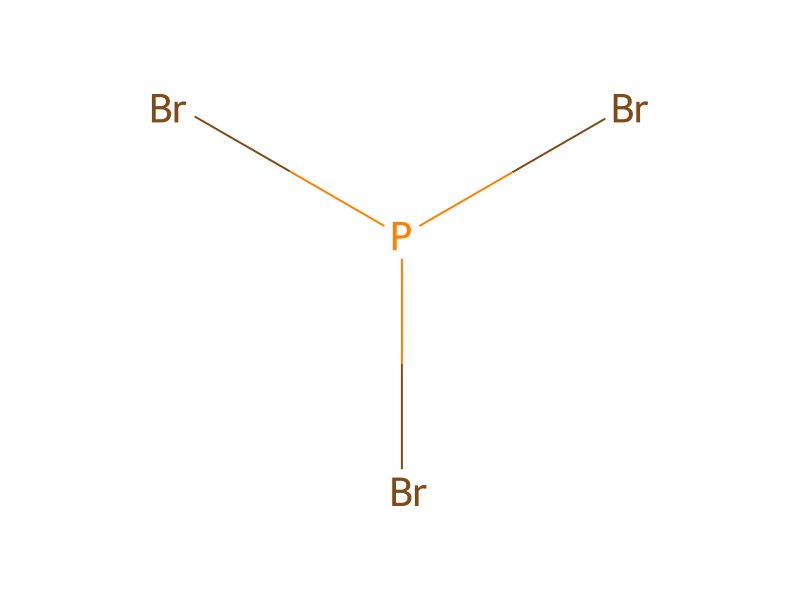
HCID 887MethanolHCID 24614Phosphorus tribromideHCID 19702329HCID 19702329, compound

Product 1

HCID 232169621-(2-Bromo-3-hydroxyphenyl)ethanoneYield 47%

Reagents, catalysts & solvents 1

HCID 6344DichloromethaneSolvent2×

Conditions

Temperature
-40 °C

Procedure

Under a nitrogen atmosphere, 1-(2-bromo-3-methoxy phenyl)ethanone (30.5 g, 229 mmol) which had been obtained in Reference example 1(1b) was dissolved in methylene chloride (500 mL), and added dropwise with a 1.0 M solution of tribromo phosphine in dichloromethane (293 mL, 293 mmol) at −80° C. over 5 hours. Upon the completion of the dropwise addition, the mixture was stirred for 17 hours at −40° C. Subsequently, the reaction solution was cooled to −80° C. and added dropwise with methanol (500 mL). Upon the completion of the dropwise addition, the temperature was raised to −40° C. followed by stirring for 3 hours. The temperature of the reaction solution was raised to room temperature. The solvent was distilled off under reduced pressure until the solution turned green. After adding ethanol, the mixture was extracted with ethyl acetate/hexane (1:1, V/V). After neutralization with a saturated aqueous solution of sodium hydrogen carbonate, the solvent was distilled off under reduced pressure. The residue was purified by silica gel chromatography (hexane:ethyl acetate, 100:0-55:45, V/V) to give the title compound as a colorless oily substance (13.5 g, yield 47%).


Workup

  1. additionUpon the completion of the dropwise addition
  2. temperatureSubsequently, the reaction solution was cooled to −80° C.
  3. additionUpon the completion of the dropwise addition
  4. temperaturethe temperature was raised to −40° C.
  5. stirringby stirring for 3 hours
  6. temperatureThe temperature of the reaction solution was raised to room temperature
  7. distillationThe solvent was distilled off under reduced pressure until the solution
  8. additionAfter adding ethanol
  9. extractionthe mixture was extracted with ethyl acetate/hexane (1:1, V/V)
  10. distillationAfter neutralization with a saturated aqueous solution of sodium hydrogen carbonate, the solvent was distilled off under reduced pressure
  11. customThe residue was purified by silica gel chromatography (hexane:ethyl acetate, 100:0-55:45, V/V)

Sources & evidence

ORD record
ord-87e818178ce640709f1aaf76ffffc623
Source dataset
uspto-grants-2012_05
DOI
10.6084/m9.figshare.5104873.v1
Patent number
US08183272B2

Reaction notes

Loading…

On this pageParticipantsConditionsProcedureWorkupSources & evidenceReaction notes