Methanol → 5-(3-Bromophenyl)-5-methylmorpholin-3-one
Reaction equation

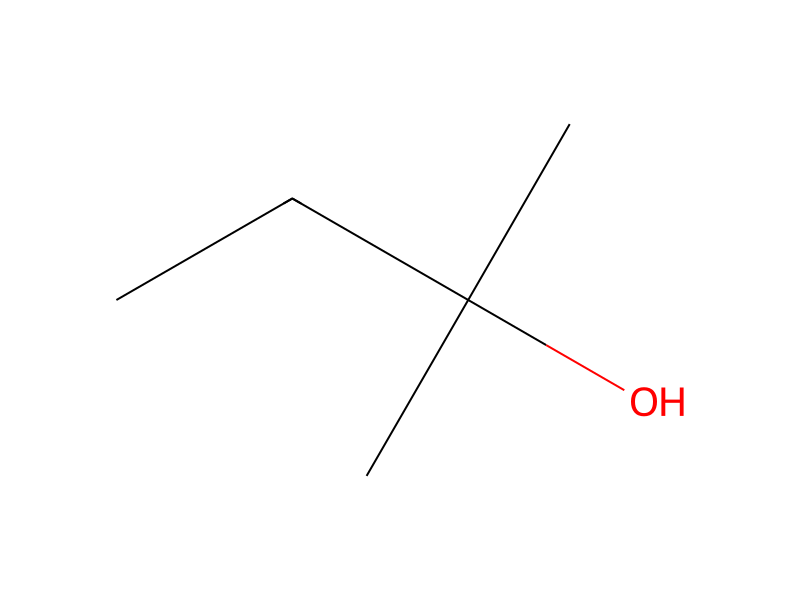
[Br:1][C:2]1[CH:3]=[C:4]([C:8]([NH:12][C:13](=[O:16])[CH2:14]Cl)([CH3:11])[CH2:9][OH:10])[CH:5]=[CH:6][CH:7]=1.[K].CCSC(N(CC(C)C)CC(C)C)=O.CO>CC(O)(CC)C>[Br:1][C:2]1[CH:3]=[C:4]([C:8]2([CH3:11])[NH:12][C:13](=[O:16])[CH2:14][O:10][CH2:9]2)[CH:5]=[CH:6][CH:7]=1Participants





Procedure
A solution of (RS)-N-[1-(3-bromo-phenyl)-2-hydroxy-1-methyl-ethyl]-2-chloro-acetamide (5.36 g, 17 mmol) in 2-methyl-2-butanol (100 ml) was treated in one portion with potassium tent-butylate (6.66 g, 58 mmol). Initially, the temperature rose to 30° C.; the reaction mixture was left to cool to room temperature and stirring was continued for one hour. For the workup, the reaction mixture was treated with methanol (50 ml), then evaporated at reduced pressure. The residue was purified by chromatography on silica gel using a gradient of dichloromethane/methanol=100/0 to 75/25 as the eluent. There were obtained 4.18 g (88% of theory) of (RS)-5-(3-bromo-phenyl)-5-methyl-morpholin-3-one as a white solid. Mass (calculated) C11H12BrNO2 [270.128]; (found) [M+H]+=270, [M+2-H]+==272.
Workup
- customrose to 30° C.
- waitthe reaction mixture was left
- customevaporated at reduced pressure
- customThe residue was purified by chromatography on silica gel using a gradient of dichloromethane/methanol=100/0 to 75/25 as the eluent
Sources & evidence
- ORD record
- ord-4b4d45f8e75542c4ab3273f779f65774
- Source dataset
- uspto-grants-2012_05
- Patent number
- US08188079B2
Reaction notes
Loading…