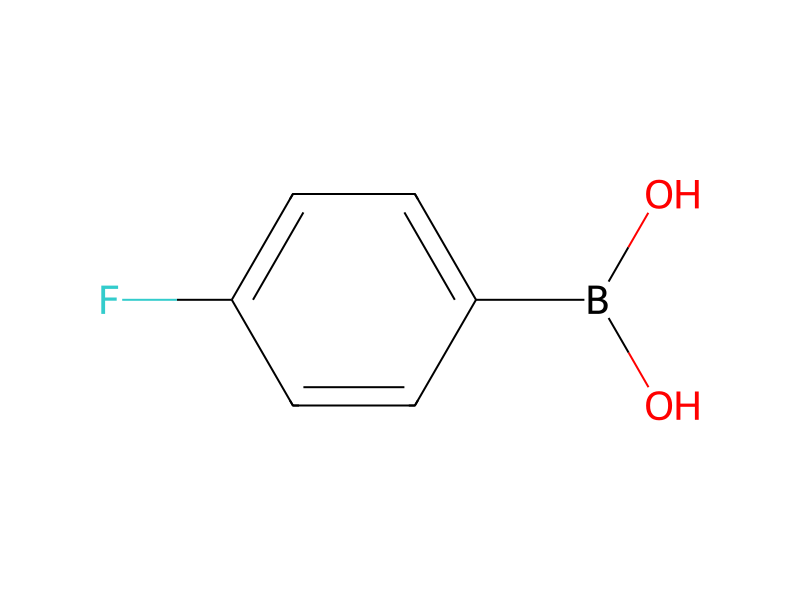
[Br:1][C:2]1[CH:3]=[N:4][C:5](I)=[N:6][CH:7]=1.[F:9][C:10]1[CH:15]=[CH:14][C:13](B(O)O)=[CH:12][CH:11]=1.C(=O)([O-])[O-].[Na+].[Na+].FC1C(F)=C(OCCCCCCCC)C=CC=1C1N=CC(Br)=CN=1>C1C=CC([P]([Pd]([P](C2C=CC=CC=2)(C2C=CC=CC=2)C2C=CC=CC=2)([P](C2C=CC=CC=2)(C2C=CC=CC=2)C2C=CC=CC=2)[P](C2C=CC=CC=2)(C2C=CC=CC=2)C2C=CC=CC=2)(C2C=CC=CC=2)C2C=CC=CC=2)=CC=1.COCCOC>[F:9][C:10]1[CH:15]=[CH:14][C:13]([C:5]2[N:4]=[CH:3][C:2]([Br:1])=[CH:7][N:6]=2)=[CH:12][CH:11]=1--Quantities: 5-bromo-2-iodopyrimidine 2 (4.00 g, 14.0 mmol), 4-fluorophenylboronic acid 19 (2.44 g, 17.4 mmol), tetrakis(triphenylphosphine)palladium (324 mg, 0.28 mmol), DME (50 ml), aqueous 2M sodium carbonate (50 ml). The experimental procedure was as described for compound 4. The crude product was purified by flash chromatography (5% ethyl acetate-light petroleum) to give the fluorophenylpyrimidine 20 (3.3 g, 94%) (from MeOH), m.p. 155.5° C.; νmax /cm-1 (KBr) 1595,1525, 1505, 1400s, 1220, 1150 and 785; δ7.15 (2H, dd, J 9, 3'- and 5'-H), 8.41 (2H, dd, J 9 and 4, 2'- and 6'-H) and 8.80 (2H, s, 4- and 6-H); m/z 254 (M+), 252 (M+), 227 (M+ -HCN), 225 (M+ -HCN), 146 and 121.