HomeMCPWorkbenchSkills
HomeWorkbenchNotificationsMe
llms.txt · MCP GuidePrivacy Policy · Terms of Service · Supportv1.8.0
  1. Home
  2. /Reaction

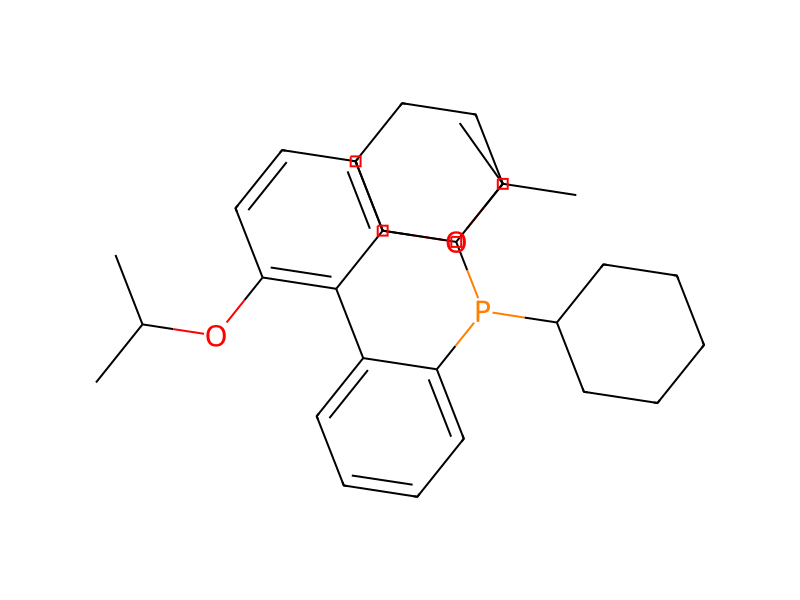
2-Dicyclohexylphosphino-2',6'-diisopropoxybiphenyl → HCID 86670418, compound

HRID 1972635
Notes
Print preview

Reaction equation

HRID 1972635 reaction equation
[C:1]([CH:4]1[NH:9][CH2:8][CH2:7][N:6]([C:10]([O:12][CH2:13][C:14]2[CH:19]=[CH:18][CH:17]=[CH:16][CH:15]=2)=[O:11])[CH2:5]1)#[C:2][CH3:3].Br[C:21]1[CH:26]=[CH:25][C:24]([C:27]([OH:36])([C:32]([F:35])([F:34])[F:33])[C:28]([F:31])([F:30])[F:29])=[CH:23][CH:22]=1.C1(P(C2CCCCC2)C2C=CC=CC=2C2C(OC(C)C)=CC=CC=2OC(C)C)CCCCC1.CC(C)([O-])C.[Na+]>CC(OC1C=CC=C(OC(C)C)C=1C1C(P(C2CCCCC2)C2CCCCC2)=CC=CC=1)C.CC(OC)(C)C.C1C=[C-]C(CCN)=CC=1.Cl[Pd+].C1(C)C=CC=CC=1>[C:1]([CH:4]1[N:9]([C:21]2[CH:26]=[CH:25][C:24]([C:27]([OH:36])([C:32]([F:33])([F:35])[F:34])[C:28]([F:31])([F:29])[F:30])=[CH:23][CH:22]=2)[CH2:8][CH2:7][N:6]([C:10]([O:12][CH2:13][C:14]2[CH:15]=[CH:16][CH:17]=[CH:18][CH:19]=2)=[O:11])[CH2:5]1)#[C:2][CH3:3]
ParticipantsConditionsProcedureWorkupSources & evidenceReaction notes

Participants

7

Reactant 4

HCID 162179852-Dicyclohexylphosphino-2',6'-diisopropoxybiphenyl2×HCID 232335702-(4-Bromophenyl)-1,1,1,3,3,3-hexafluoropropan-2-olHCID 23676156Sodium t-butoxideHCID 66582529HCID 66582529, compound

Product 1

HCID 86670418HCID 86670418, compound

Reagents, catalysts & solvents 2

HCID 66572931HCID 66572931, compoundCatalyst
HCID 1140TolueneSolvent

Conditions

Temperature
100 °C

Procedure

A 150-mL reaction vessel was charged with benzyl 3-(prop-1-yn-1-yl)piperazine-1-carboxylate (2.88 g, 11.2 mmol), 2-(4-bromophenyl)-1,1,1,3,3,3-hexafluoropropan-2-ol (4.36 g, 13.5 mmol, Bioorg. Med. Chem. Lett. 2002, 12, 3009), dicyclohexyl(2′,6′-diisopropoxy-[1,1′-biphenyl]-2-yl)phosphine, RuPhos (0.530 g, 1.14 mmol, Sigma-Aldrich, St. Louis, Mo.), RuPhos Palladacycle (0.417 g, 0.572 mmol, Strem Chemical Inc, Newburyport, Mass.), sodium tert-butoxide (2.73 g, 28.4 mmol, Strem Chemical Inc, Newburyport, Mass.) and toluene (35 mL). The mixture was degassed by bubbling Ar through the solution for 10 min. The vessel was sealed and heated at 100° C. for 1.5 h. The reaction mixture was cooled to room temperature and water (100 mL) was added. The aqueous phase was extracted with EtOAc (3×100 mL) and the combined organic phases were washed with saturated aqueous sodium chloride (150 mL). The organic extracts were dried over sodium sulfate, filtered and concentrated in vacuo. The crude product was purified by column chromatography (100 g of silica, 0 to 50% EtOAc in hexanes) to afford benzyl 3-(1-propyn-1-yl)-4-(4-(2,2,2-trifluoro-1-hydroxy-1-(trifluoromethyl)ethyl)phenyl)-1-piperazinecarboxylate as a yellow solid.

Workup

  1. customA 150-mL reaction vessel
  2. customThe mixture was degassed
  3. customby bubbling Ar through the solution for 10 min
  4. customThe vessel was sealed
  5. temperatureThe reaction mixture was cooled to room temperature
  6. additionwater (100 mL) was added
  7. extractionThe aqueous phase was extracted with EtOAc (3×100 mL)
  8. washthe combined organic phases were washed with saturated aqueous sodium chloride (150 mL)
  9. dry with materialThe organic extracts were dried over sodium sulfate
  10. filtrationfiltered
  11. concentrationconcentrated in vacuo
  12. customThe crude product was purified by column chromatography (100 g of silica, 0 to 50% EtOAc in hexanes)

Sources & evidence

ORD record
ord-fb211b339e20436a91df0200b319d596
Source dataset
uspto-grants-2013_04
DOI
10.6084/m9.figshare.5104873.v1
Patent number
US08431563B2

Reaction notes

Loading…

On this pageParticipantsConditionsProcedureWorkupSources & evidenceReaction notes