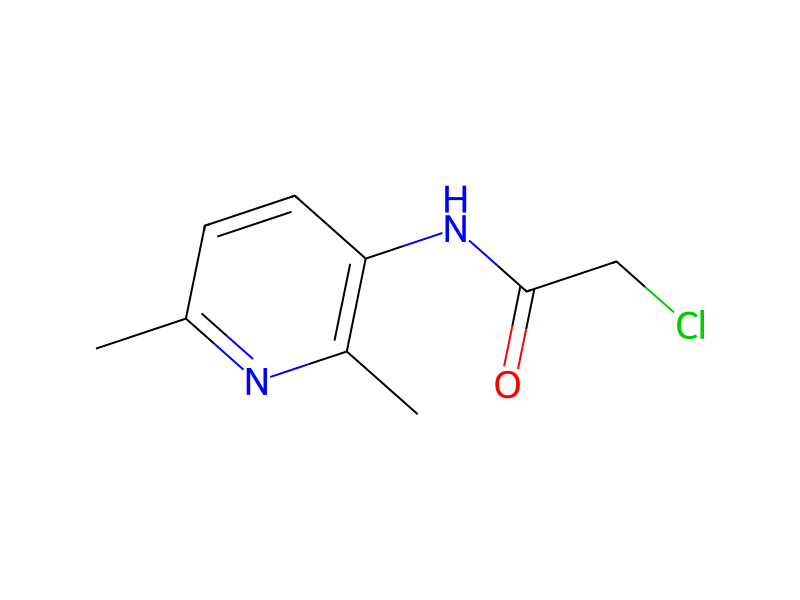
[CH3:1][C:2]1[C:7]([NH:8][C:9](=[O:12])[CH2:10]Cl)=[CH:6][CH:5]=[C:4]([CH3:13])[N:3]=1.[P:14]([O-:26])([O:18][C:19]1[CH:24]=[CH:23][C:22]([Cl:25])=[CH:21][CH:20]=1)([O:16][CH3:17])=[O:15].[K+].CC(C)=O>CCOCC>[P:14]([O:18][C:19]1[CH:24]=[CH:23][C:22]([Cl:25])=[CH:21][CH:20]=1)([O:16][CH3:17])([O:26][CH2:10][C:9]([NH:8][C:7]1[C:2]([CH3:1])=[N:3][C:4]([CH3:13])=[CH:5][CH:6]=1)=[O:12])=[O:15]N-(2,6-Dimethyl-3-pyridyl)-α-chloroacetamide (32.2 grams), potassium O-methyl O-(4-chlorophenyl) phosphate (26 grams) and acetone (200 ml) are charged into a glass reaction vessel equipped with a mechanical stirrer, thermometer and reflux condenser. The reaction mixture is heated at reflux for a period of about 24 hours. After this time the mixture is stripped of solvent on a steam bath and the resulting residue is dissolved in ether. The ether solution is washed with water and is dried over magnesium sulfate. The dried solution is then evaporated under vacuum to yield the desired product O-[2-(2,6-dimethyl-3-pyridylamino)-2-ketoethyl] O-methyl O-(4-chlorophenyl) phosphate.
Loading…