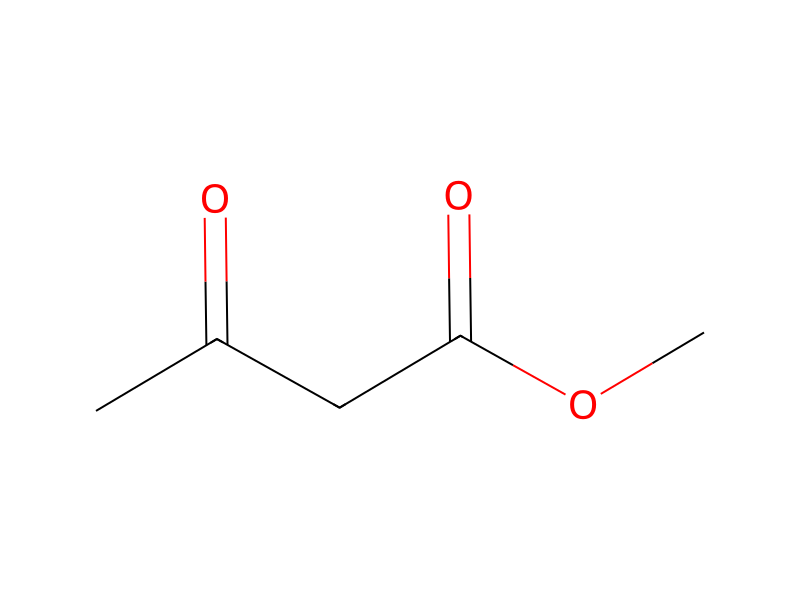
Methyl acetoacetate → Methyl 2,4-dioxo-6-p-tolylcyclohexanecarboxylate
HRID 1973502
Reaction equation

[C:1]([O:7][CH3:8])(=[O:6])[CH2:2][C:3]([CH3:5])=[O:4].[CH3:9][C:10]1[CH:22]=[CH:21][C:13]([CH:14]=[CH:15][C:16](OCC)=[O:17])=[CH:12][CH:11]=1>C[O-].[Na+]>[O:4]=[C:3]1[CH2:5][C:16](=[O:17])[CH2:15][CH:14]([C:13]2[CH:12]=[CH:11][C:10]([CH3:9])=[CH:22][CH:21]=2)[CH:2]1[C:1]([O:7][CH3:8])=[O:6]Participants
4
Reactant 2

Product 1

Reagents, catalysts & solvents 1

Procedure
To a cooled solution of sodium methoxide (from 2.3 g., sodium and absolute methanol, 40 ml.) was added with shaking methyl acetoacetate (11.8 g.). When homogeneous the mixture was treated with ethyl p-methylcinnamate (19. g.) and then heated under reflux for 18 hrs. After cooling the precipitated sodium enolate salt (formula III) was collected by filtration and washed with acetone. This enolate salt was then converted to the corresponding dione of formula II by dissolving in cold water followed by acidification with 2-N-hydrochloric acid, which afforded crystalline methyl 2,4-dioxo-6-p-tolylcyclohexanecarboxylate.