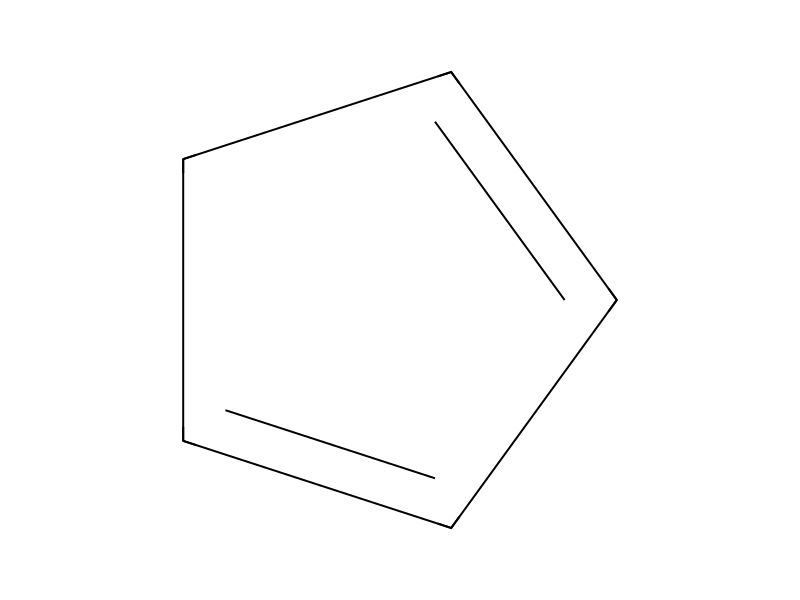
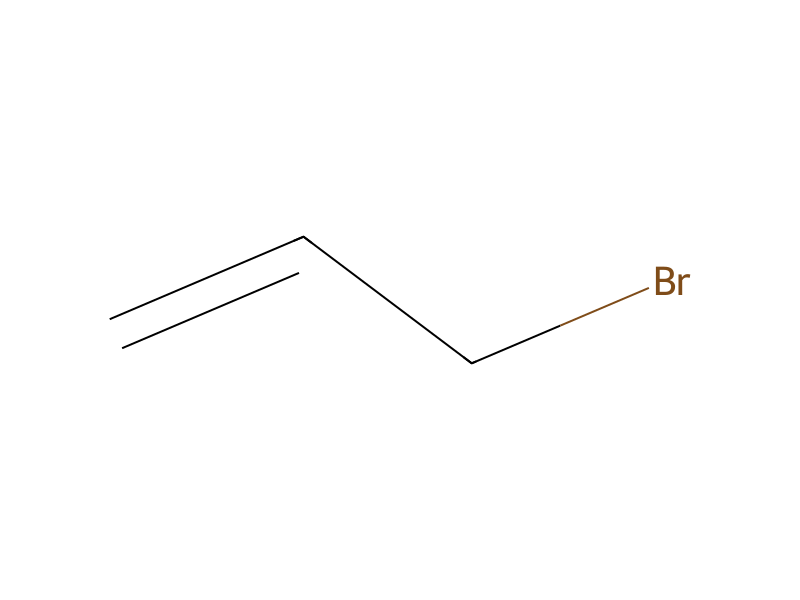
A 1.0 L double-walled reactor, provided with baffles, condenser, top stirrer, thermometer and dropping funnel equipped with a nitrogen inlet was charged with ALIQUAT 336 (7.7 g, 19 mmol), allylbromide (43.6 g, 0.36 mol) and freshly cracked cyclopentadiene (11.9 g, 0.18 mol). A 50 wt. % NaOH aqueous solution (147 g) was then added via the dropping funnel to the turbulently stirred reaction mixture. The reaction mixture was cooled with water during the addition of the base. After 3 hours of stirring at room temperature, GC analysis showed that 6% of mono-, 75% of di- and 19% of tri(allyl)cyclopentadiene were present in the mixture. The product was distilled at reduced pressure and after vacuum distillation, 9.75 g of di(allyl)cyclopentadiene were obtained. Characterization of the product took place with the aid of GC, GC-MS, 13C- and 1H-NMR.