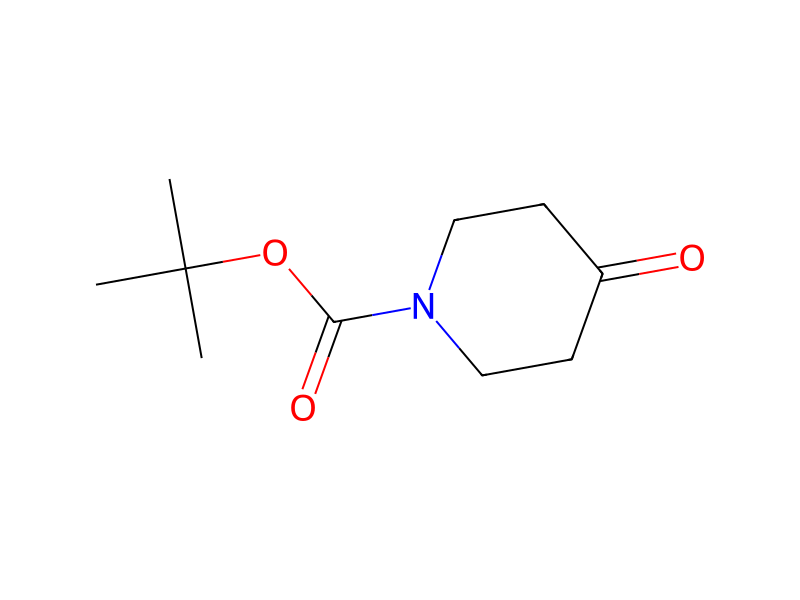
[C:1]([O:5][C:6]([N:8]1[CH2:13][CH2:12][C:11](=O)[CH2:10][CH2:9]1)=[O:7])([CH3:4])([CH3:3])[CH3:2].[Cl-].[Cl:16][C:17]1[CH:42]=[CH:41][CH:40]=[CH:39][C:18]=1[CH2:19][P+](C1C=CC=CC=1)(C1C=CC=CC=1)C1C=CC=CC=1.C[O-].[Na+].CO>CO.O>[C:1]([O:5][C:6]([N:8]1[CH2:13][CH2:12][C:11](=[CH:19][C:18]2[CH:39]=[CH:40][CH:41]=[CH:42][C:17]=2[Cl:16])[CH2:10][CH2:9]1)=[O:7])([CH3:4])([CH3:3])[CH3:2]To a solution of 9.199 g (46.168 mM) of 1-(tert-butoxycarbonyl)-4-piperidone and 19.5 g (46.2 mM) of 2-chlorobenzyltriphenylphosphonium chloride in 50 ml of methanol was added 8.91 g (46.2 mM) of 28% sodium methoxide-methanol at room temperature and the mixture was refluxed for 36 hours. This reaction mixture was poured in water and extracted with 2 portions of ethyl acetate. The pooled organic layer was dried over Na2SO4 and the solvent was distilled off under reduced pressure. To the residue was added diethyl ether and the resulting precipitate (triphenylphosphine oxide) was filtered off and washed with diethyl ether. The filtrate and washes were combined and the solvent was distilled off under reduced pressure. The residue was purified by silica gel column chromatography (hexane/ethyl acetate=9/1 to 6/1) and crystallized from cold hexane to provide the title compound.