HCID 178522937, compound → HCID 178522938, compound
Reaction equation

[Cl:1][C:2]1[CH:25]=[CH:24][C:5]([CH2:6][NH:7][C:8]([C:10]2[C:11]([OH:23])=[C:12]3[CH:18]=[C:17]([C:19]#[C:20][CH2:21][OH:22])[S:16][C:13]3=[N:14][CH:15]=2)=[O:9])=[CH:4][CH:3]=1>[Pd].C(Cl)Cl.CO>[Cl:1][C:2]1[CH:3]=[CH:4][C:5]([CH2:6][NH:7][C:8]([C:10]2[C:11]([OH:23])=[C:12]3[CH:18]=[C:17]([CH2:19][CH2:20][CH2:21][OH:22])[S:16][C:13]3=[N:14][CH:15]=2)=[O:9])=[CH:24][CH:25]=1Participants
4
Reactant 1

Product 1

Reagents, catalysts & solvents 2

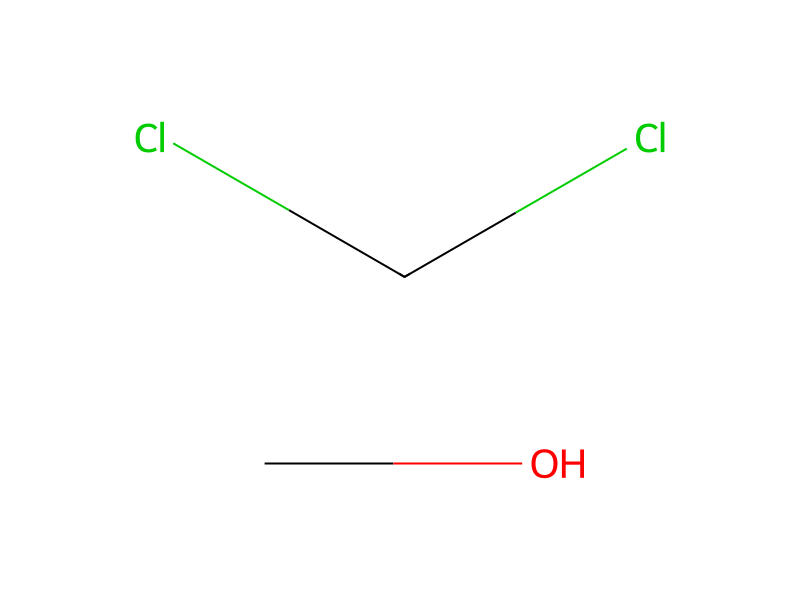
Procedure
A solution of N-(4-chlorobenzyl)-4-hydroxy-2-(3-hydroxy-1-propynyl)-thieno[2,3-b]pyridine-5-carboxamide (Example No.5) (0.300 g) in 1/1 CH2Cl2/CH3OH (70 mL) is hydrogenated over 10% Pd/C (90 mg) at 35 psi. After 3 h, an additional 90 mg of 10% Pd/C is added, and the solution is hydrogenated at 35 psi for 1 h. The reaction mixture is filtered through a Celite pad, and the filtrate is concentrated in vacuo. The resulting pale orange solid is purified via column chromatography (CH2Cl2:CH3OH; 98:2, 95:5). Fractions homogeneous by TLC are combined and concentrated in vacuo to yield and off-white solid which is recrystallized from ethanol to yield 0.083 g (27%) of the title compound as a white, crystalline solid.