2-Amino-5-(4-chlorophenyl)pyridine-3-carboxylic acid → 5-(4-Chlorophenyl)pyridin-2-amine
HRID 1980307
Reaction equation

[NH2:1][C:2]1[C:7](C(O)=O)=[CH:6][C:5]([C:11]2[CH:16]=[CH:15][C:14]([Cl:17])=[CH:13][CH:12]=2)=[CH:4][N:3]=1>[Cu].N1C2C(=CC=CC=2)C=CC=1>[Cl:17][C:14]1[CH:15]=[CH:16][C:11]([C:5]2[CH:6]=[CH:7][C:2]([NH2:1])=[N:3][CH:4]=2)=[CH:12][CH:13]=1Participants
4
Reactant 1

Product 1

Reagents, catalysts & solvents 2
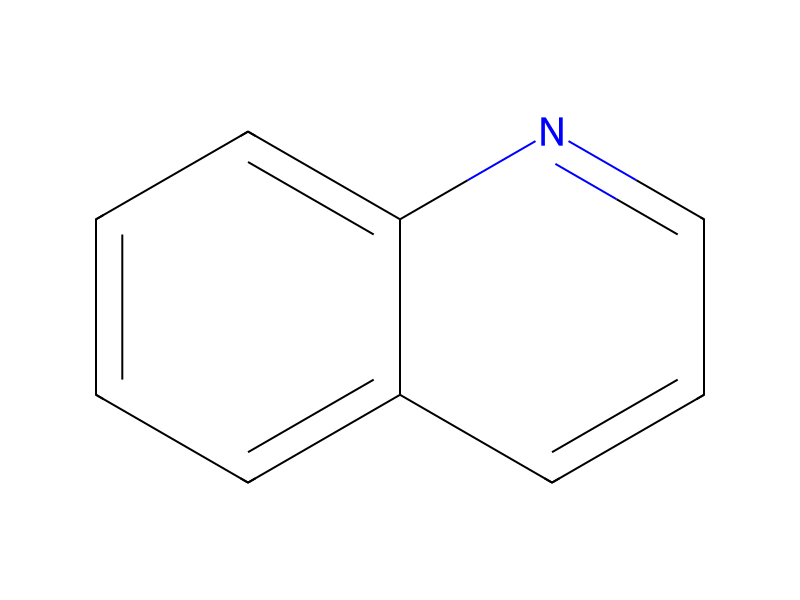
Conditions
- Temperature
- 230 °C
Procedure
2-Amino-5-(4-chlorophenyl)-3-pyridinecarboxylic acid (1.0 gram), copper powder (0.2 gram), and 10 ml quinoline were heated in an oil bath at 205° C. After 21/2 hours, the temperature was raised to 230° C. for an additional hour. A solid precipitate formed which was collected and then washed with ethyl acetate. The solution was then stripped and the residue chromatographed on 300 ml of silica gel. The gum-like solid was applied to the top of the column with ether and then eluted with additional ether until all the quinoline was removed. Elution with ethyl acetate very slowly produced a brown solid which was recrystallized from methanol-water giving tan plate-like crystals, yield 400 mg, m.p. 122°-124° C.