HomeMCPWorkbenchSkills
HomeWorkbenchNotificationsMe
llms.txt · MCP GuidePrivacy Policy · Terms of Service · Supportv1.8.3
  1. Home
  2. /Reaction

Acetamide → N-(6-{4-[3-(3-Trifluoromethyl-phenyl)-ureido]-phenoxy}-pyrimidin-4-yl)-acetamide

HRID 1993585
Print

Reaction equation

HRID 1993585 reaction equation
Cl[C:2]1[N:7]=[CH:6][N:5]=[C:4]([O:8][C:9]2[CH:14]=[CH:13][C:12]([NH:15][C:16]([NH:18][C:19]3[CH:24]=[CH:23][CH:22]=[C:21]([C:25]([F:28])([F:27])[F:26])[CH:20]=3)=[O:17])=[CH:11][CH:10]=2)[CH:3]=1.ClC1[CH:35]=[C:34]([O:36]C2C=CC([N+]([O-])=O)=CC=2)[N:33]=CN=1.C(N)(=O)C>O1CCOCC1.C1C=CC(/C=C/C(/C=C/C2C=CC=CC=2)=O)=CC=1.C1C=CC(/C=C/C(/C=C/C2C=CC=CC=2)=O)=CC=1.C1C=CC(/C=C/C(/C=C/C2C=CC=CC=2)=O)=CC=1.[Pd].[Pd]>[F:26][C:25]([F:28])([F:27])[C:21]1[CH:20]=[C:19]([NH:18][C:16](=[O:17])[NH:15][C:12]2[CH:13]=[CH:14][C:9]([O:8][C:4]3[N:5]=[CH:6][N:7]=[C:2]([NH:33][C:34](=[O:36])[CH3:35])[CH:3]=3)=[CH:10][CH:11]=2)[CH:24]=[CH:23][CH:22]=1
ParticipantsConditionsProcedureWorkupSources & evidenceReaction notes

Participants

6

Reactant 3

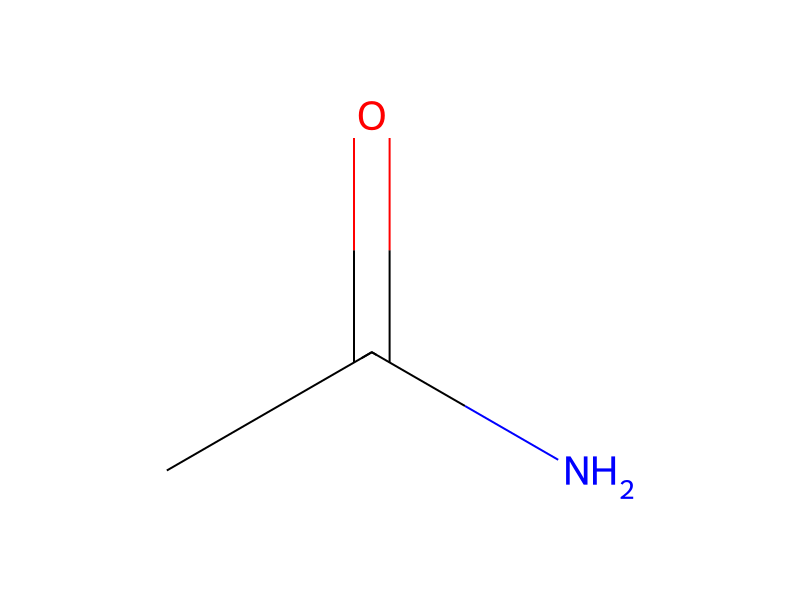
HCID 178AcetamideHCID 11742215HCID 11742215, compoundHCID 143638504-Chloro-6-(4-nitrophenoxy)pyrimidine

Product 1

HCID 11201276N-(6-{4-[3-(3-Trifluoromethyl-phenyl)-ureido]-phenoxy}-pyrimidin-4-yl)-acetamide

Reagents, catalysts & solvents 2

HCID 9811564
Bis(dibenzylideneacetone)palladium
Catalyst
HCID 312751,4-DioxaneSolvent

Conditions

Temperature
55 °C

Procedure

1-[4-(6-Chloro-pyrimidin-4-yloxy)-phenyl]-3-(3-trifluoromethyl-phenyl)-urea (compound of Example 56) (100 mg, 0.245 mmol)1 acetamide (40 mg1 0.678 mmol), 4,5-bis(diphenylphosphino)-9,9-dimethyl-xanthrene (9 mg), and tris(dibenzylideneacetone)dipalladium (6 mg) dissolved in dioxane (3 mL) are stirred at 55° C. under Ar for 8 h. After evaporating the solvent under reduced pressure, the residue is partitioned between H2O (60 mL) and AcOEt (200 mL). The organic phase is separated, dried (MgSO4) and concentrated under reduced pressure. The product is purified by preparative thin layer chromatography (four 20×20 cm silica gel plates, acetone/CH2Cl2=3:7): M+H=431.9; Rf (acetone/CH2Cl2=3:7): 0.29; 1H-NMR (400 MHz, DMSO-d6): 10.85 (s, 1H, pyrimidinyl), 9.03/8.84 (s/s, 1H/1H, urea), 8.45 (s, 1H, NH), 7.98 (s, 1H, pyrimidinyl), 7.56 (d, 8.5 Hz, 1H, phenyl-CF3), 7.50 (d/s, 9.0 Hz, 2H/1H, phenyl/phenyl-CF3), 7.49 (t, 1H, phenyl-CF3), 7.29 (d, 8.5 Hz, 1H, phenyl-CF3), 7.06 (d, 9.0 Hz, 2H, phenyl), 7.39 (d, 8.5 Hz, 2H), 7.13 (s, 1H), 7.11 (d, 8.5 Hz, 2H), 6.86 (d, 8.5 Hz, 2H), 5.94 (s, 1H, pyrimidinyl), 2.09 (s, 3H, CH3).

Workup

  1. customAfter evaporating the solvent under reduced pressure
  2. customthe residue is partitioned between H2O (60 mL) and AcOEt (200 mL)
  3. customThe organic phase is separated
  4. dry with materialdried (MgSO4)
  5. concentrationconcentrated under reduced pressure
  6. customThe product is purified by preparative thin layer chromatography (four 20×20 cm silica gel plates, acetone/CH2Cl2=3:7)

Sources & evidence

ORD record
ord-f61dbe6fee5d470a80c45101d1c75c2f
Source dataset
uspto-grants-2010_01
DOI
10.6084/m9.figshare.5104873.v1
Patent number
US07652022B2

Reaction notes

On this pageParticipantsConditionsProcedureWorkupSources & evidenceReaction notes