Picolinoyl Chloride Hydrochloride → (3-(2-Tert-butylphenoxy)pyrrolidin-1-yl)(pyridin-2-yl)methanone
HRID 2041988
Reaction equation

Cl.[C:2]([C:6]1[CH:17]=[CH:16][CH:15]=[CH:14][C:7]=1[O:8][CH:9]1[CH2:13][CH2:12][NH:11][CH2:10]1)([CH3:5])([CH3:4])[CH3:3].Cl.[N:19]1[CH:24]=[CH:23][CH:22]=[CH:21][C:20]=1[C:25](Cl)=[O:26]>N1C=CC=CC=1>[C:2]([C:6]1[CH:17]=[CH:16][CH:15]=[CH:14][C:7]=1[O:8][CH:9]1[CH2:13][CH2:12][N:11]([C:25]([C:20]2[CH:21]=[CH:22][CH:23]=[CH:24][N:19]=2)=[O:26])[CH2:10]1)([CH3:5])([CH3:3])[CH3:4]Participants
4
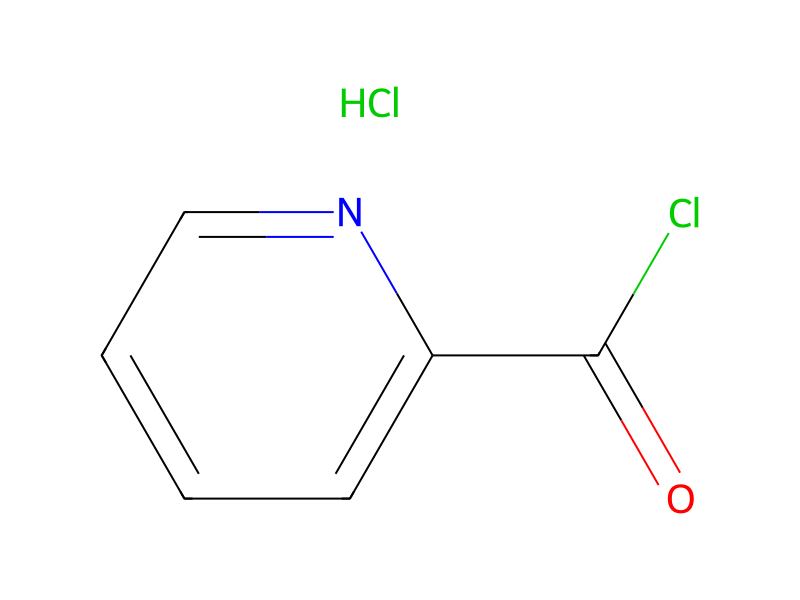



Procedure
To a stirred solution of 3-(2-tert-butylphenoxy)pyrrolidine hydrochloride (0.26 g, 1.00 mmol) in pyridine (2.5 mL) was added picolinoyl chloride hydrochloride (0.20 g, 1.10 mmol) at room temperature. After 16 h the reaction mixture was concentrated under reduced pressure, the residue partitioned between ethyl acetate (50.0 mL) and water (50.0 mL) and separated. The organic layer was washed with saturated sodium chloride (50.0 mL), dried (MgSO4), filtered, and concentrated under reduced pressure. Purification by flash column chromatography (silica gel, 80:20 to 50:50 heptane/ethyl acetate) provided (3-(2-tert-butylphenoxy)pyrrolidin-1-yl)(pyridin-2-yl)methanone (0.14 g, 43%) as a pale yellow oil.