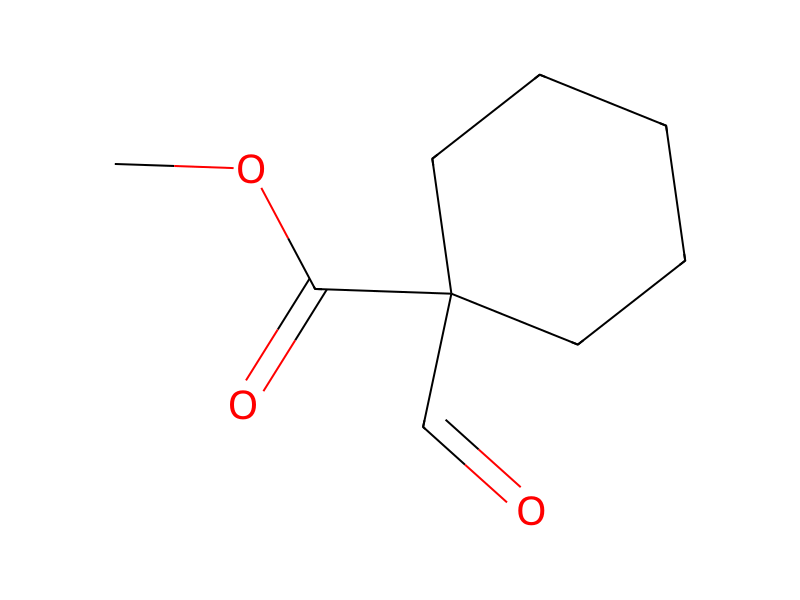
Dimethyl Cyclohexane-1,1-dicarboxylate → Methyl 1-formylcyclohexane-1-carboxylate
HRID 2055171
Reaction equation

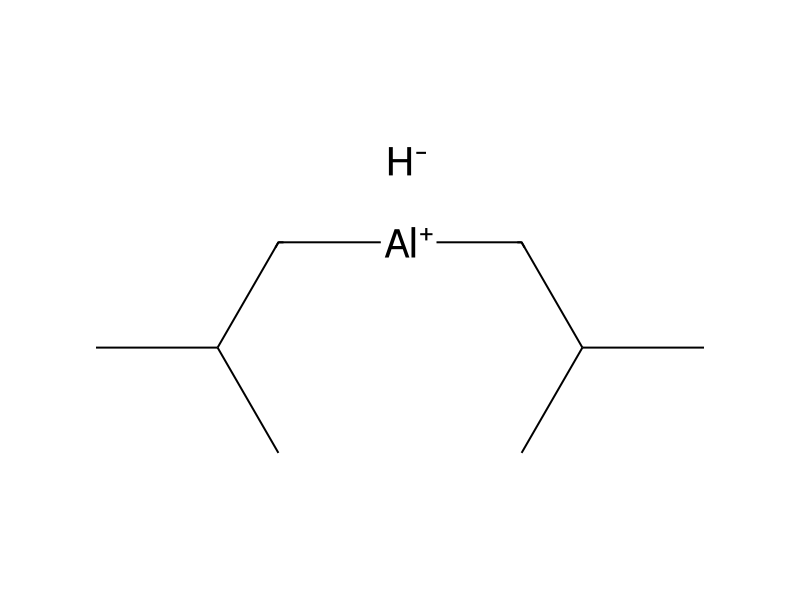
[C:1]1([C:11](OC)=[O:12])([C:7]([O:9][CH3:10])=[O:8])[CH2:6][CH2:5][CH2:4][CH2:3][CH2:2]1.[H-].C([Al+]CC(C)C)C(C)C>ClCCl>[CH3:10][O:9][C:7]([C:1]1([CH:11]=[O:12])[CH2:2][CH2:3][CH2:4][CH2:5][CH2:6]1)=[O:8]Participants
4
Reactant 2

Product 1
Reagents, catalysts & solvents 1

Procedure
To a solution of dimethyl cyclohexane-1,1-dicarboxylate (2.8 g, 14.0 mmol) in dichloromethane(55 mL) at −78° C. under a nitrogen atmosphere was added diisobutylaluminum hydride (1.5M in toluene, 19 mL, 28 mmol) dropwise. After 3 h, the reaction mixture was quenched with saturated aqueous NH4Cl solution (11 mL), then 1N HCl (14 mL) and allowed to warm to room temperature. The mixture was filtered through Celite@ and the organic phase was separated, was dried (MgSO4) and was evaporated in vacuo to yield the title compound which was used without further purification (1.23 g, 52%). MH+171.