Reaction equation

[CH:1]1[C:6]([Br:7])=[CH:5][C:4]([Br:8])=[C:3]([O:9][C:10]2[C:15]([Br:16])=[CH:14][C:13]([Br:17])=[C:12]([Br:18])[CH:11]=2)[CH:2]=1.P(OC1C=CC=CC=1)(OC1C=CC=CC=1)(OCC(CC)CCCC)=O.O.O.O.O.O.O.O.O.O.O.C(=O)([O-])[O-].[Na+].[Na+]>O>[CH:1]1[C:6]([Br:7])=[CH:5][C:4]([Br:8])=[C:3]([O:9][C:10]2[C:15]([Br:16])=[CH:14][C:13]([Br:17])=[C:12]([Br:18])[CH:11]=2)[CH:2]=1Participants
4
Reactant 2

Product 1

Reagents, catalysts & solvents 1

Procedure
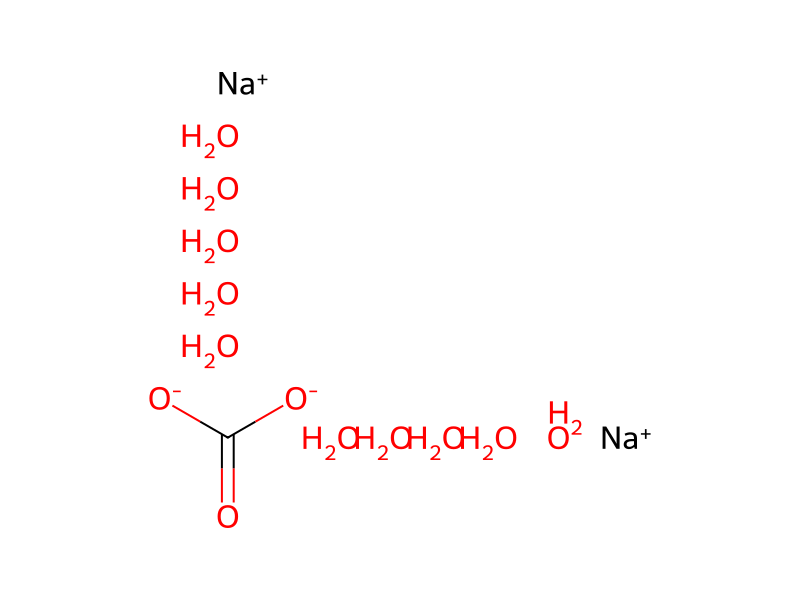
Using the procedure of Examples II and IV, the pentabromodiphenyl ether-2-ethylhexyl diphenyl phosphate blend was heated to 130° C., and sodium carbonate decahydrate (2.7% W/W on the blend) was added and subjected to agitation in the closed system for one-half hour. Thereafter, the system was opened in order to permit water to escape. The molten mixture was filtered to obtain the purified blend. Relevant properties of the blend are given in Table III.
Workup
- waitsubjected to agitation in the closed system for one-half hour
- filtrationThe molten mixture was filtered
- customto obtain the purified blend
Sources & evidence
- ORD record
- ord-e3755f6f64ff4cec9d58fbca0c3ac339
- Source dataset
- uspto-grants-1980_07
- Patent number
- US04214103
Linked notes
Loading…