HomeMCPWorkbenchSkills
HomeWorkbenchNotificationsMe
llms.txt · MCP GuidePrivacy Policy · Terms of Service · Supportv1.8.3
  1. Home
  2. /Reaction

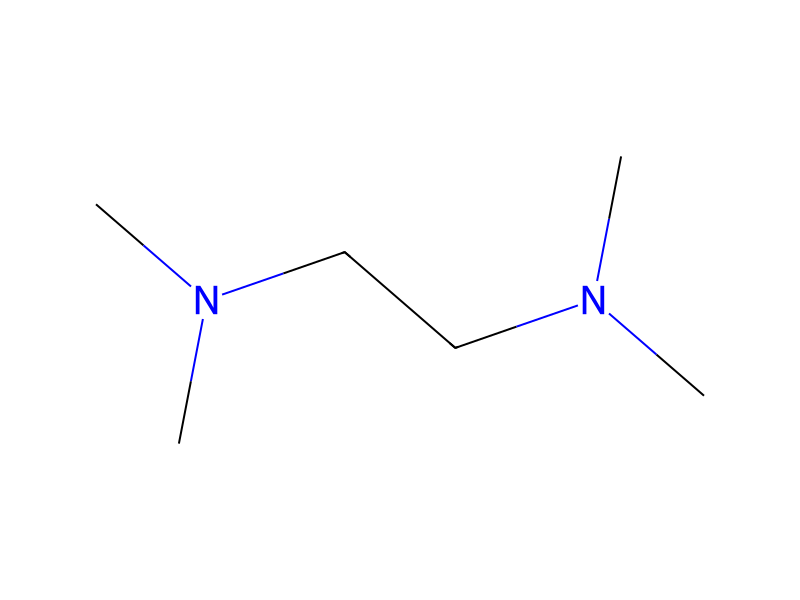
N,N,N',N'-Tetramethylethylenediamine → 1-phenyl-2-(4-methylphenyl)-2,3-dihydro-1H-2,1-benzazaphosphole-1-oxide

HRID 2058903
Print

Reaction equation

HRID 2058903 reaction equation
C([Li])CCC.CN(C)CCN(C)C.[CH2:14]([NH:21][C:22]1[CH:27]=[CH:26][C:25]([CH3:28])=[CH:24][CH:23]=1)[C:15]1[CH:20]=[CH:19][CH:18]=[CH:17][CH:16]=1.[C:29]1([P:35](Cl)(Cl)=[O:36])[CH:34]=[CH:33][CH:32]=[CH:31][CH:30]=1>CCCCCC.C1CCCCC1>[C:29]1([P:35]2(=[O:36])[C:20]3[CH:19]=[CH:18][CH:17]=[CH:16][C:15]=3[CH2:14][N:21]2[C:22]2[CH:23]=[CH:24][C:25]([CH3:28])=[CH:26][CH:27]=2)[CH:34]=[CH:33][CH:32]=[CH:31][CH:30]=1
ParticipantsConditionsProcedureWorkupSources & evidenceReaction notes

Participants

7

Reactant 4

HCID 8037N,N,N',N'-TetramethylethylenediamineHCID 69990Phenylphosphonic dichlorideHCID 79403N-benzyl-4-methylanilineHCID 178418339Butyllithium

Product 1

HCID 130375031-phenyl-2-(4-methylphenyl)-2,3-dihydro-1H-2,1-benzazaphosphole-1-oxideYield 20%

Reagents, catalysts & solvents 2

HCID 8058
Hexane
Solvent
HCID 8078CyclohexaneSolvent3×

Conditions

Temperature
26 °C

Procedure

Under a static nitrogen atmosphere at 0° C., a solution of n-butyllithium (3.9 g, 0.061 mol) in hexane was added to a solution of tetramethylethylenediamine (1.8 g, 0.0155 mol) in 30 ml. of anhydrous cyclohexane with constant stirring. While maintaining the temperature of the reaction at 0° C., a solution of N-benzyl-4-toluidine (5.9 g, 0.03 mol) in 30 ml. of anhydrous cyclohexane was added to the reaction mixture to produce a suspension containing a dilithio compound. The suspension containing the dilithio compound was stirred for 4 hours at 26° C. and then cooled to 0° C. A solution of phenylphosphonic dichloride (6.25 g, 0.032 mol) in 30 ml. of anhydrous cyclohexane was added dropwise to the suspension and the resulting mixture was stirred for 1.5 hours at 26° C. The reaction was quenched with the rapid addition of 6 ml. of acetic acid. The mixture was concentrated in vacuo and the resulting residue partitioned in methylene chloride and water. The layers were separated and the methylene chloride layer was washed with 5% hydrochloric acid, then water, dried over sodium sulfate and concentrated in vacuo to yield a brown-green glass. The brown-green glass was crystallized from ethyl acetate to yield light green plates which were recrystallized from toluene to yield 1-phenyl-2-(4-methylphenyl)-2,3-dihydro-1H-2,1-benzazaphosphole-1-oxide (1.9 g, 20% yield) as white crystals having a melting point of 197°-199° C. and the following analysis:

Workup

  1. temperatureWhile maintaining
  2. customthe temperature of the reaction at 0° C.
  3. customto produce a suspension
  4. temperaturecooled to 0° C
  5. stirringthe resulting mixture was stirred for 1.5 hours at 26° C
  6. customThe reaction was quenched with the rapid addition of 6 ml
  7. concentrationThe mixture was concentrated in vacuo
  8. customthe resulting residue partitioned in methylene chloride
  9. customThe layers were separated
  10. washthe methylene chloride layer was washed with 5% hydrochloric acid
  11. dry with materialwater, dried over sodium sulfate
  12. concentrationconcentrated in vacuo
  13. customto yield a brown-green glass
  14. customThe brown-green glass was crystallized from ethyl acetate
  15. customto yield light green plates which
  16. customwere recrystallized from toluene

Sources & evidence

ORD record
ord-c77b0227f06744df86aa4e598282cefa
Source dataset
uspto-grants-1982_03
DOI
10.6084/m9.figshare.5104873.v1
Patent number
US04319913

Reaction notes

On this pageParticipantsConditionsProcedureWorkupSources & evidenceReaction notes


