HCID 3483246, compound → 2-(2-Carboxy-1-phenylcarbamoyl-ethylamino)-6-chloro-quinoline-3-carboxylic acid
HRID 2065652
Reaction equation

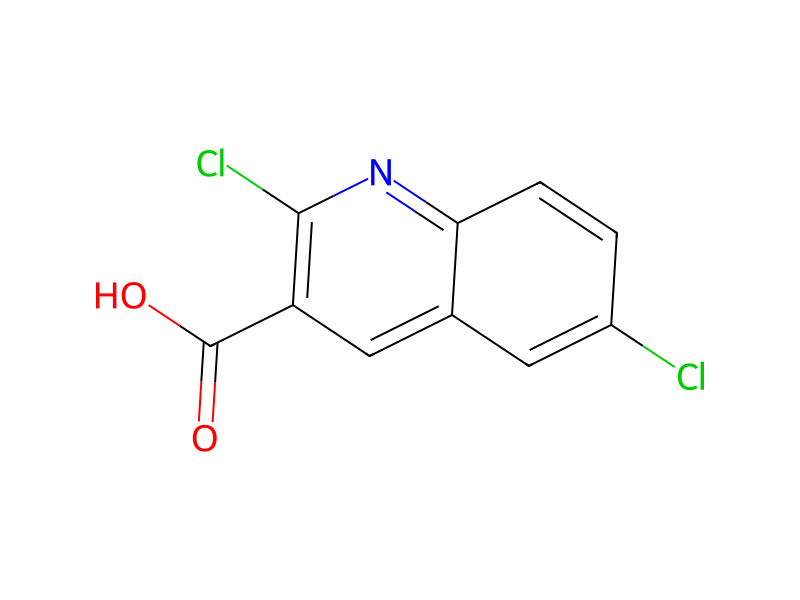
Cl[C:2]1[C:11]([C:12]([OH:14])=[O:13])=[CH:10][C:9]2[C:4](=[CH:5][CH:6]=[C:7]([Cl:15])[CH:8]=2)[N:3]=1.[NH2:16][CH:17]([C:22]([NH:24][C:25]1[CH:30]=[CH:29][CH:28]=[CH:27][CH:26]=1)=[O:23])[CH2:18][C:19]([OH:21])=[O:20]>>[C:19]([CH2:18][CH:17]([NH:16][C:2]1[C:11]([C:12]([OH:14])=[O:13])=[CH:10][C:9]2[C:4](=[CH:5][CH:6]=[C:7]([Cl:15])[CH:8]=2)[N:3]=1)[C:22](=[O:23])[NH:24][C:25]1[CH:30]=[CH:29][CH:28]=[CH:27][CH:26]=1)([OH:21])=[O:20]Participants
3


Procedure
In close analogy to the procedure described in Example 32, 2,6-dichloroquinoline-3-carboxylic acid is reacted with 3-amino-N-phenyl-succinamic acid to provide the title compound in good yield. LCMS m/z 414 (M+1).
Sources & evidence
- ORD record
- ord-9520ef4518314a23b9d21ed6d9152464
- Source dataset
- uspto-grants-2012_10
- DOI