2-Amino-3-phenyl-succinic acid → 2-(3-Carboxy-6-chloro-quinolin-2-ylamino)-3-phenyl-succinic acid
HRID 2065656
Reaction equation

Cl[C:2]1[C:11]([C:12]([OH:14])=[O:13])=[CH:10][C:9]2[C:4](=[CH:5][CH:6]=[C:7]([Cl:15])[CH:8]=2)[N:3]=1.[NH2:16][CH:17]([CH:21]([C:25]1[CH:30]=[CH:29][CH:28]=[CH:27][CH:26]=1)[C:22]([OH:24])=[O:23])[C:18]([OH:20])=[O:19]>>[C:12]([C:11]1[C:2]([NH:16][CH:17]([CH:21]([C:25]2[CH:30]=[CH:29][CH:28]=[CH:27][CH:26]=2)[C:22]([OH:24])=[O:23])[C:18]([OH:20])=[O:19])=[N:3][C:4]2[C:9]([CH:10]=1)=[CH:8][C:7]([Cl:15])=[CH:6][CH:5]=2)([OH:14])=[O:13]Participants
3

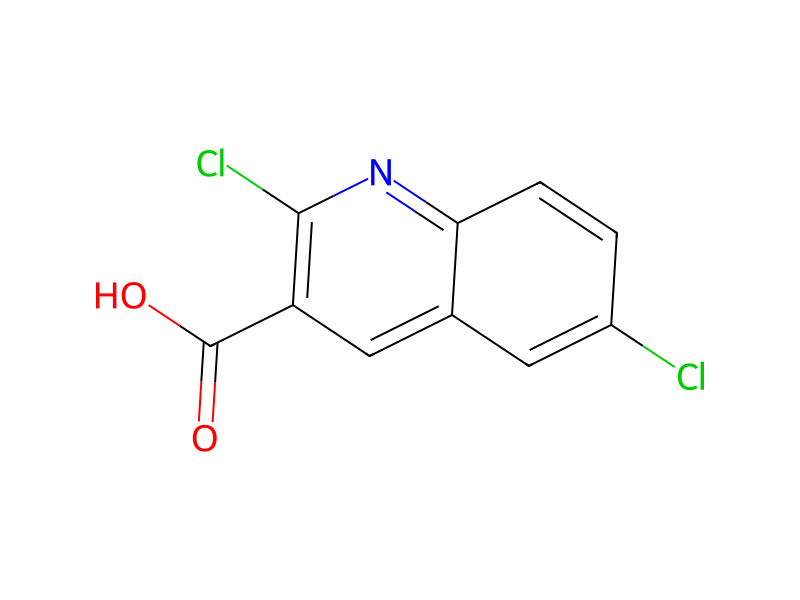

Procedure
In close analogy to the procedure described in Example 32, 2,6-dichloroquinoline-3-carboxylic acid is reacted with 2-amino-3-phenyl-succinic acid [J. Med. Chem. 1973, 16, 1277-1280] to provide the title compound in moderate yield.
Sources & evidence
- ORD record
- ord-06cae4cf880f4da49698b09184403f89
- Source dataset
- uspto-grants-2012_10
- DOI