3-Fluorophenylalanine → 2-[1-Carboxy-2-(3-fluoro-phenyl)-ethylamino]-6-chloro-quinoline-3-carboxylic acid
HRID 2065667
Reaction equation

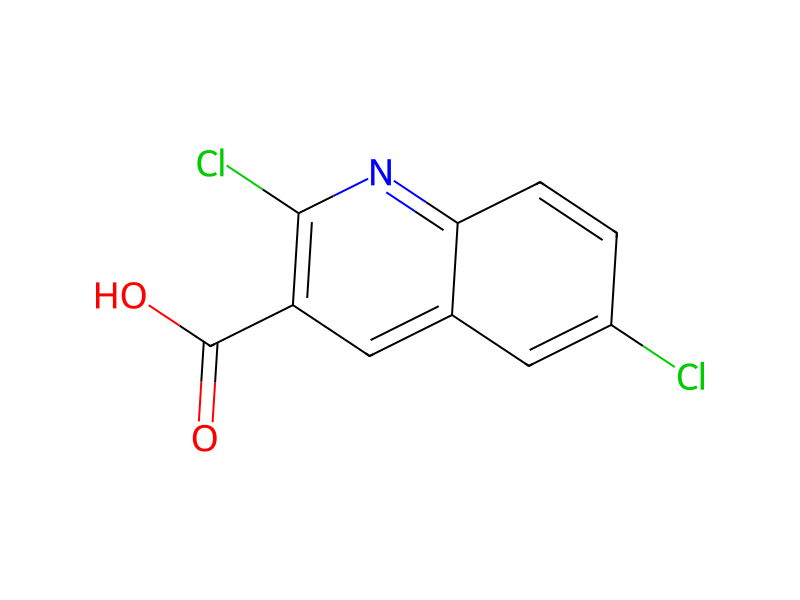
Cl[C:2]1[C:11]([C:12]([OH:14])=[O:13])=[CH:10][C:9]2[C:4](=[CH:5][CH:6]=[C:7]([Cl:15])[CH:8]=2)[N:3]=1.[F:16][C:17]1[CH:18]=[C:19]([CH:26]=[CH:27][CH:28]=1)[CH2:20][CH:21]([C:23]([OH:25])=[O:24])[NH2:22]>CS(C)=O>[C:23]([CH:21]([NH:22][C:2]1[C:11]([C:12]([OH:14])=[O:13])=[CH:10][C:9]2[C:4](=[CH:5][CH:6]=[C:7]([Cl:15])[CH:8]=2)[N:3]=1)[CH2:20][C:19]1[CH:26]=[CH:27][CH:28]=[C:17]([F:16])[CH:18]=1)([OH:25])=[O:24]Participants
4



Procedure
In close analogy to the procedure described in Example 32, 2,6-dichloro-quinoline-3-carboxylic acid is reacted with 3-fluoro-DL-phenylalanine in DMSO to provide the title compound in high yield.