Potassium Hydroxide → 5-(3-Methyl-1H-indazol-5-yl)-1,3,4-thiadiazol-2-amine
Reaction equation

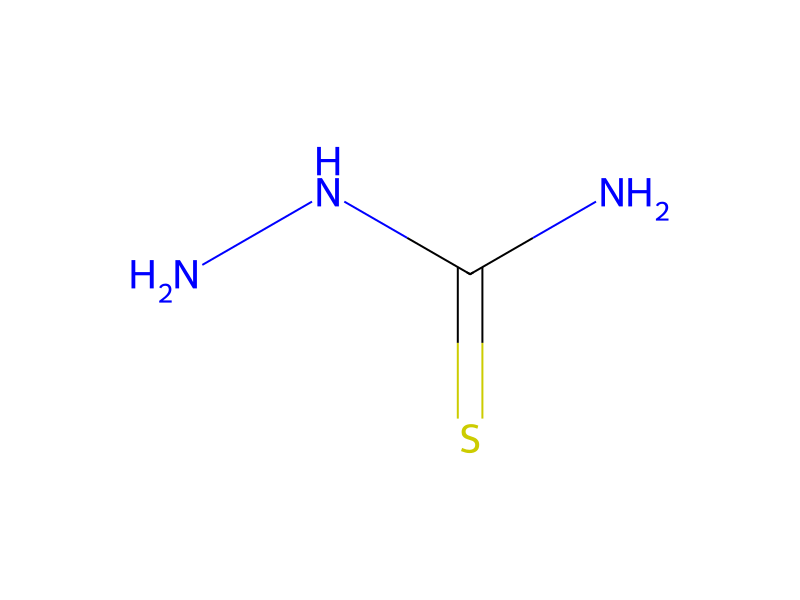
[CH3:1][C:2]1[C:10]2[C:5](=[CH:6][CH:7]=[C:8]([C:11](O)=O)[CH:9]=2)[NH:4][N:3]=1.[NH2:14][NH:15][C:16]([NH2:18])=[S:17].[OH-].[K+]>>[CH3:1][C:2]1[C:10]2[C:5](=[CH:6][CH:7]=[C:8]([C:11]3[S:17][C:16]([NH2:18])=[N:15][N:14]=3)[CH:9]=2)[NH:4][N:3]=1Participants
4



Conditions
- Temperature
- 90 °C
Procedure
To a round bottom flash equipped with an overhead stir motor was added 80 g of polyphosphoric acid. The flask was heated to 90° C. and a finely ground mixture of 3-methyl-1H-indazole-5-carboxylic acid 4e (8.0 g, 45.5 mmol) and thiosemicarbazide (4.1 g (45.4 mmol) was slowly added over a period of 30 min. The resulting mixture was stirred for 24 hr. At this point 200 ml of ice water was added to the solution, and the pH of the resulting mixture was adjusted to 7.0 using solid KOH. A precipitate was formed in the process. The precipitate was isolated by filtration, washed sequentially with water and ether, and dried at reduced pressure, affording 5-(3-Methyl-1H-indazol-5-yl)-[1,3,4]thiadiazol-2-ylamine (4f) (5.50 g, 53% yield) as a tan colored solid. 1H 400 MHz NMR (d6 DMSO), 2.54 (3H, s), 3.17 (1H, s), 7.54 (1H, d, J=8.0 Hz), 7.83 (1H, t, J=8.0 Hz), 8.06 (1H, s). MS (API-ES) m/z (%): 232 (100%, M++H).