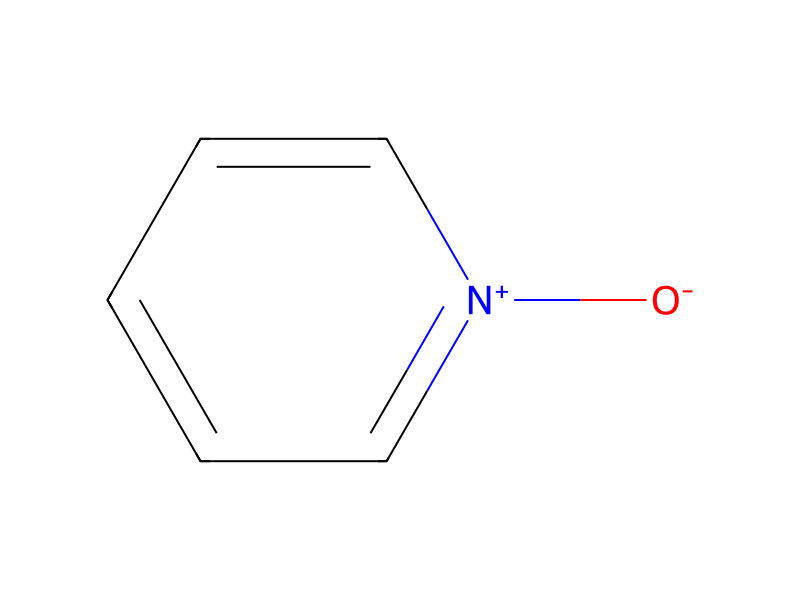
Into a 1 L round bottom flask equipped with mechanical stirring and reflux condenser was charged methyl 2-(5-ethoxycarbonylamino-1,2,4-thiadiazol-3-yl)-bromoacetate (50.0 g, 0.154 mol, 1.0 eq.) followed by acetonitrile (500 mL). To the clear light yellow solution was charged pyridine N-oxide (37.0 g, 0.385 mol, 2.5 eq) and the reaction mixture was heated to reflux and maintained there for three hours until reaction completion was determined by proton NMR analysis. The solution was cooled and the acetonitrile was removed by rotary evaporation to give a thin yellow oil. The oil was dissolved in dichloromethane (500 mL) and the organic was washed once with brine (1×200 mL). The brine solution was extracted several times with dichloromethane (5×100 mL) and the organic layers were combined and dried with sodium sulfate, filtered and the solvent evaporated to give a clear slightly yellow oil which solidified upon standing at room temperature. The solid was dried under high vacuum to give 37.36 grams of the title compound. 1H NMR (CDCl3) δ 1.40 (t, 3H); 4.06 (s, 3H); 4.46 (q, 2H).