HomeMCPWorkbenchSkills
HomeWorkbenchNotificationsMe
llms.txt · MCP GuidePrivacy Policy · Terms of Service · Supportv1.8.3
  1. Home
  2. /Reaction

3,5-Dibromopyridine → 4-(5-Bromo-pyridin-3-yl)-1,4-diaza-bicyclo[3.2.1]octane dihydrochoride

HRID 2117258
Print

Reaction equation

HRID 2117258 reaction equation
C[O-].[Na+].[ClH:4].Cl.[N:6]12[CH2:13][CH:10]([CH2:11][CH2:12]1)[NH:9][CH2:8][CH2:7]2.[Br:14][C:15]1[CH:16]=[N:17][CH:18]=[C:19](Br)[CH:20]=1.C1(P(C2C=CC=CC=2)C2C=CC3C(=CC=CC=3)C=2C2C3C(=CC=CC=3)C=CC=2P(C2C=CC=CC=2)C2C=CC=CC=2)C=CC=CC=1.CC([O-])(C)C.[Na+]>CO.C(Cl)(Cl)Cl.C1C=CC(/C=C/C(/C=C/C2C=CC=CC=2)=O)=CC=1.C1C=CC(/C=C/C(/C=C/C2C=CC=CC=2)=O)=CC=1.C1C=CC(/C=C/C(/C=C/C2C=CC=CC=2)=O)=CC=1.[Pd].[Pd]>[ClH:4].[ClH:4].[Br:14][C:15]1[CH:20]=[C:19]([N:9]2[CH:10]3[CH2:13][N:6]([CH2:12][CH2:11]3)[CH2:7][CH2:8]2)[CH:18]=[N:17][CH:16]=1
ParticipantsConditionsProcedureWorkupSources & evidenceReaction notes

Participants

9

Reactant 5

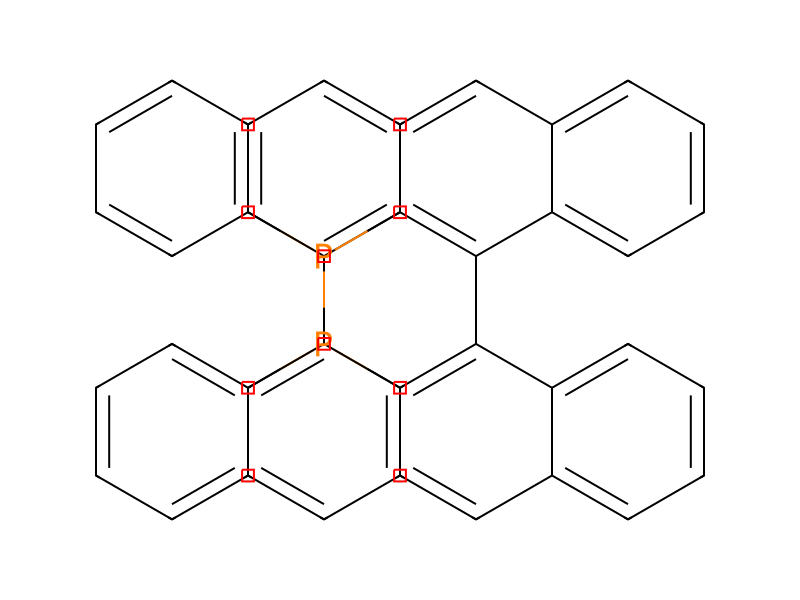
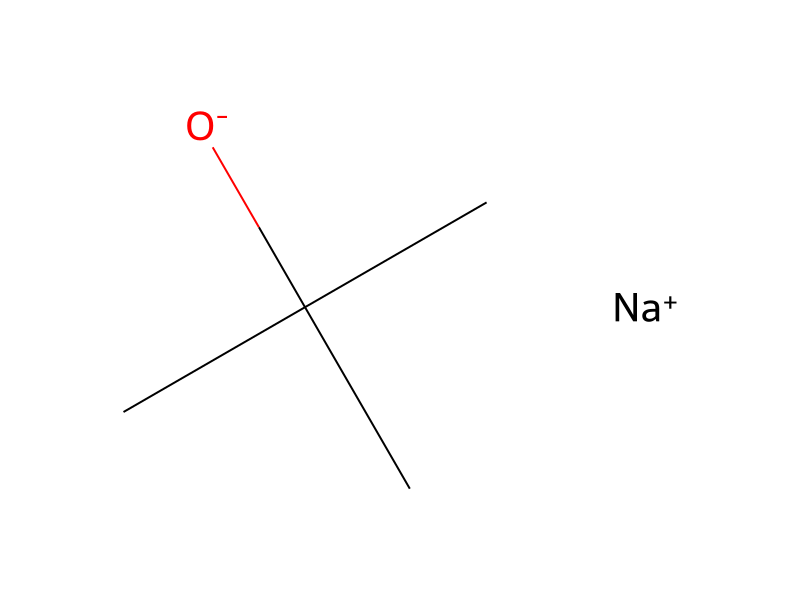
HCID 693693,5-DibromopyridineHCID 634876Binap, (A+-)-HCID 10942334Sodium MethoxideHCID 123740781,4-Diazabicyclo[3.2.1]octane dihydrochlorideHCID 23676156Sodium t-butoxide

Product 1

HCID 69314486
4-(5-Bromo-pyridin-3-yl)-1,4-diaza-bicyclo[3.2.1]octane dihydrochoride
Yield 48%

Reagents, catalysts & solvents 3

HCID 9811564Bis(dibenzylideneacetone)palladiumCatalystHCID 887MethanolSolventHCID 6212ChloroformSolvent

Conditions

Temperature
80 °C

Procedure

A solution of NaOMe (0.48 mL, 2.2 mmol, 4.6 M in MeOH) was added to a solution of 1,4-diaza-bicyclo[3.2.1]octane dihydrochloride (0.2 g, 1.1 mmol) in MeOH (15 mL) at 50° C. The solvent was removed in vacuo and the resulting residue was triturated with toluene (5 mL). The toluene solution was added to a flask containing 3,5-dibromopyridine (0.26 g, 1.1 mmol), 2,2′-bis(diphenylphosphino)-1,1′-binaphthyl (0.2 g, 0.33 mmol), tris(dibenzylideneacetone)dipalladium (0) (0.1 g, 0.11 mmol), and NaOtBu (0.15 g, 1.5 mmol) under and atmosphere of nitrogen. The resulting mixture was heated at 80° C. for 20 h. The mixture was cooled to RT, diluted with CHCl3 (10 mL) and washed with water (10 mL). The organic layer was concentrated and purified by chromatography using a gradient elution (20/1 CHCl3/MeOH to 10/1 CHCl3/MeOH) to give 90 mg (30%) of the title compound as its free base. This material was dissolved in EtOH and treated with concentrated HCl (0.2 mL). The solvent was removed in vacuo and the EtOH was added and the solvent was once again removed in vacuo. This procedure was repeated until concentration resulted in a solid (3× total). The resulting solid was triturated with iPrOH and the resulting solid was collected to give 82 mg (22%) of the title compound: (data for free base) 1H NMR (CDCl3, 400 MHz) δ 8.13 (d, 1H, J=2.9 Hz), 8.06 (d, 1H, J=2.1 Hz), 7.21-7.19 (m, 1H), 4.20-4.17 (m, 1H), 3.15-3.08 (m, 3H), 3.04-2.80 (m, 4H), 2.66-2.62 (m, 1H), 1.87-1.72 (m, 2H); 13C NMR (CDCl3, 100 MHz) δ 147.0, 140.5, 136.4, 124.2, 121.1, 59.9, 57.0, 52.9, 50.7, 41.7, 29.9; APCI MS m/z 270.1, 268.1 (M+1).

Workup

  1. customThe solvent was removed in vacuo
  2. customthe resulting residue was triturated with toluene (5 mL)
  3. additionThe toluene solution was added to a flask
  4. temperatureThe mixture was cooled to RT
  5. washwashed with water (10 mL)
  6. concentrationThe organic layer was concentrated
  7. custompurified by chromatography
  8. washa gradient elution (20/1 CHCl3/MeOH to 10/1 CHCl3/MeOH)

Sources & evidence

ORD record
ord-9c8aa36f34364c0aba165909c0711a19
Source dataset
uspto-grants-2008_10
DOI
10.6084/m9.figshare.5104873.v1
Patent number
US07442694B2

Reaction notes

On this pageParticipantsConditionsProcedureWorkupSources & evidenceReaction notes