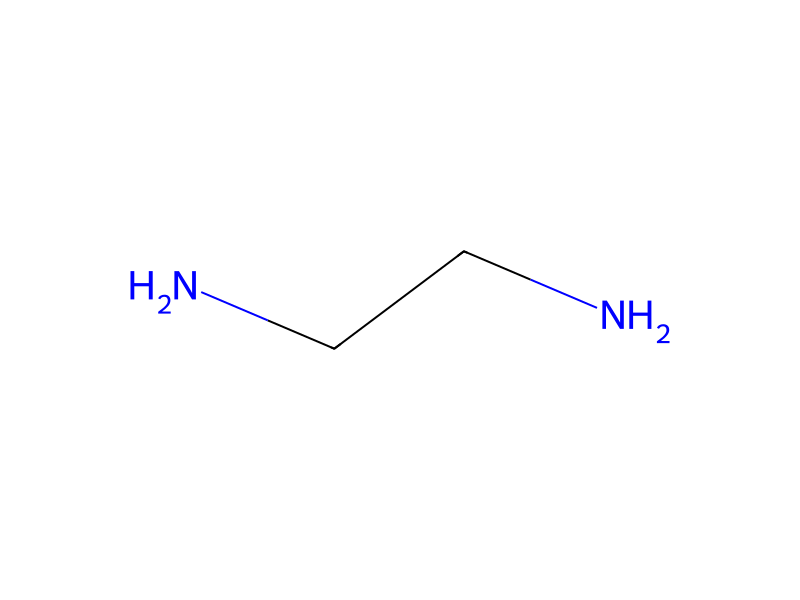
[C:1]([C:4]1[C:12]2[C:7](=[CH:8][CH:9]=[CH:10][CH:11]=2)[N:6]([S:13]([C:16]2[CH:21]=[CH:20][CH:19]=[CH:18][CH:17]=2)(=[O:15])=[O:14])[CH:5]=1)(=O)[CH3:2].[CH2:22]([NH2:25])[CH2:23][NH2:24].[BH4-].[Na+].O>C(O)C.O1CCOCC1.CCOCC>[C:16]1([S:13]([N:6]2[C:7]3[C:12](=[CH:11][CH:10]=[CH:9][CH:8]=3)[C:4]([CH:1]3[CH2:2][NH:25][CH2:22][CH2:23][NH:24]3)=[CH:5]2)(=[O:15])=[O:14])[CH:21]=[CH:20][CH:19]=[CH:18][CH:17]=1The 19.1 g of the above indole derivative in 500 ml of ethanol and 200 ml of dioxane was stirred and cooled to 0°-5° C. under argon. A solution of 3.46 g of ethylenediamine in 100 ml of ethanol was added dropwise. The temperature was maintained at 0°-5° C. until solution was complete, then the mixture was stirred at room temperature for 3.5 hours, recooled to 0°-5° C. and 4.37 g of sodium borohydride added. This mixture was stirred for 18 hours, water was added and the mixture evaporated to dryness in vacuo. The residue was dissolved in dichloromethane, washed with water, dried, filtered and evaporated giving an oil, which solidified. The solid was dissolved in cold ether, filtered and concentrated in vacuo at 40° C. The solid was collected, washed with cold ether and dried, giving 5 g of 1-(phenylsulfonyl)-3-(2-piperazinyl)-1H-indole.