HomeMCPWorkbenchSkills
HomeWorkbenchNotificationsMe
llms.txt · MCP GuidePrivacy Policy · Terms of Service · Supportv1.8.3
  1. Home
  2. /Reaction

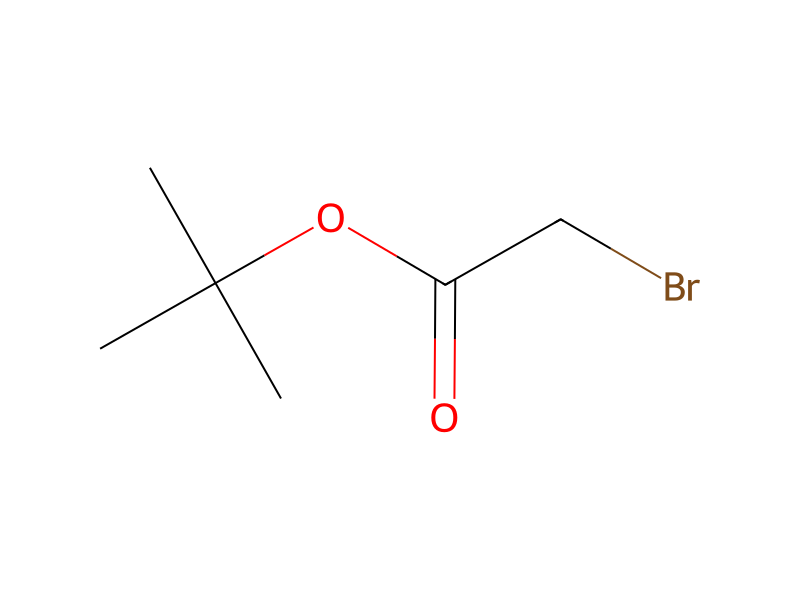
tert-Butyl bromoacetate → (6-Cyano-2-methyl-indolizin-3-yl)-acetic acid tert-butyl ester

HRID 216666
Print

Reaction equation

HRID 216666 reaction equation
Br[C:2]1[N:10]2[C:5]([CH:6]=[CH:7][C:8]([C:11]#[N:12])=[CH:9]2)=[CH:4][C:3]=1[CH3:13].Br[CH2:15][C:16]([O:18][C:19]([CH3:22])([CH3:21])[CH3:20])=[O:17]>C1C=CC(/C=C/C(/C=C/C2C=CC=CC=2)=O)=CC=1.C1C=CC(/C=C/C(/C=C/C2C=CC=CC=2)=O)=CC=1.C1C=CC(/C=C/C(/C=C/C2C=CC=CC=2)=O)=CC=1.[Pd].[Pd].CC(P(C(C)(C)C)C1[CH-]C=CC=1)(C)C.C1C=CC([C-]2C(C3C=CC=CC=3)=C(C3C=CC=CC=3)C(C3C=CC=CC=3)=C2C2C=CC=CC=2)=CC=1.[Fe+2]>[C:19]([O:18][C:16](=[O:17])[CH2:15][C:2]1[N:10]2[C:5]([CH:6]=[CH:7][C:8]([C:11]#[N:12])=[CH:9]2)=[CH:4][C:3]=1[CH3:13])([CH3:22])([CH3:21])[CH3:20]
ParticipantsProcedureWorkupSources & evidenceReaction notes

Participants

5

Reactant 2

HCID 79177tert-Butyl bromoacetateHCID 591920153-Bromo-2-methylindolizine-6-carbonitrile

Product 1

HCID 68708411(6-Cyano-2-methyl-indolizin-3-yl)-acetic acid tert-butyl esterYield 68.1%

Reagents, catalysts & solvents 2

HCID 9811564Bis(dibenzylideneacetone)palladiumCatalyst
HCID 12024214
Ditert-butyl(cyclopenta-1,3-dien-1-yl)phosphane;iron(2+);(2,3,4,5-tetraphenylcyclopenta-1,4-dien-1-yl)benzene
Catalyst

Procedure

Under an atmosphere of argon, 3-bromo-2-methyl-indolizine-6-carbonitrile (500 mg, 2.12 mmol), Pd2(dba)3 (19.5 mg, 21.2 μmol, 0.01 equiv), 1,2,3,4,5-pentaphenyl-1-(di-tert-butylphosphino)ferrocene (15.1 mg, 21.2 1μmol, 0.01 equiv) and the isolated, recrystallized Reformatsky reagent prepared from tert-butyl bromoacetate (609 mg, 2.33 mmol, 1.1 equiv) are placed in a 50-ml round bottom flask. After three careful degassing cycles, anhydrous THF (8 ml) is added, and the reaction mixture is stirred at room temperature. After 1 hour at room temperature, TLC analysis indicated incomplete conversion. Consequently, additional portions of the palladium salt, the phosphino ligand and the Reformatsky reagent are added (same quantities as above). After 1 additional hour, reagents are added again, to achieve complete conversion after a total reaction time of 4 hours at room temperature. The reaction mixture is diluted with water, and extracted three times with EtOAc. The combined organic layers are washed with brine, dried over Na2SO4, filtered, and concentrated in vacuo. Purification of the residue via flash chromatography (hexane/EtOAc 6:1) affords the title compound (390 mg, 68%). 1H NMR (400 MHz, CDCl3): δ=8.22 (t, J=1.2 Hz, 1H), 7.36 (d, J=9.2 Hz, 1H), 7.21 (s, 1H), 6.67 (dd, J=9.3/1.5 Hz, 1H). 3.61 (s, 2H), 2.31 (s, 3H), 1.44 (s, 9H). MS (ES+): 271 (M+H)+.

Workup

  1. customare placed in a 50-ml round bottom flask
  2. customAfter three careful degassing cycles, anhydrous THF (8 ml)
  3. additionis added
  4. additionConsequently, additional portions of the palladium salt, the phosphino ligand and the Reformatsky reagent are added (same quantities as above)
  5. additionAfter 1 additional hour, reagents are added again
  6. customafter a total reaction time of 4 hours
  7. customat room temperature
  8. additionThe reaction mixture is diluted with water
  9. extractionextracted three times with EtOAc
  10. washThe combined organic layers are washed with brine
  11. dry with materialdried over Na2SO4
  12. filtrationfiltered
  13. concentrationconcentrated in vacuo
  14. customPurification of the residue via flash chromatography (hexane/EtOAc 6:1)

Sources & evidence

ORD record
ord-6ce6930f934c4e57a7079a2ca3074c53
Source dataset
uspto-grants-2012_06
DOI
10.6084/m9.figshare.5104873.v1
Patent number
US08193236B2

Reaction notes

On this pageParticipantsProcedureWorkupSources & evidenceReaction notes
