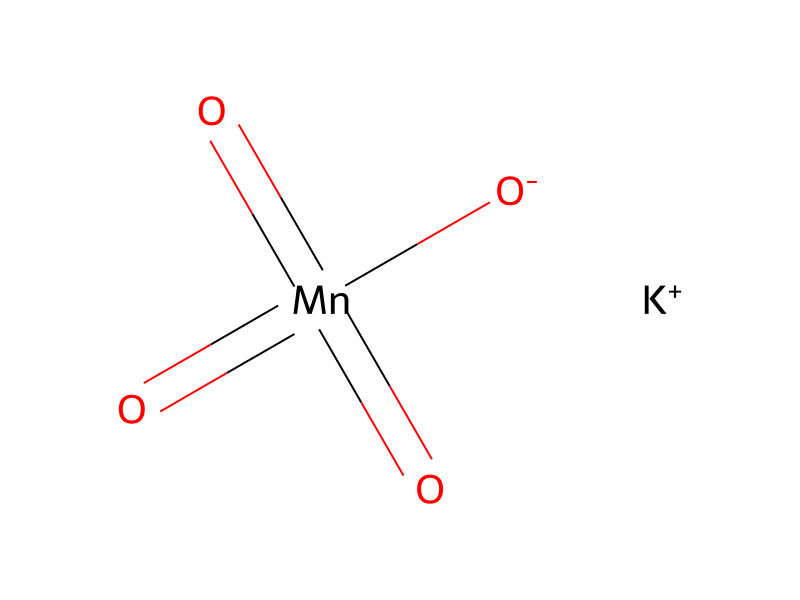
A solution of (5,5-dimethyl-[1,4]dioxan-2-yl)-methanol (657 mg, 4.5 mmol) in 1 M potassium hydroxide solution (6.7 mL, 6.7 mmol) was stirred at 5° C. A solution of potassium permanganate (1.42 g, 9 mmol) in water (10 mL) was added dropwise maintaining the internal temperature below 10° C. The reaction mixture was stirred at 5° C. for 1 h and then at room temperature for 18 h. The reaction mixture was filtered through Celite and the filter pad was washed with water and methanol and the filtrate was evaporated. The residue was acidified to pH 2 with hydrochloric acid (2 M) and the mixture was extracted with ethyl acetate and chloroform. The organic extracts were combined and washed with a small volume of brine. The organic solution was filtered through a hydrophobic frit and the filtrate was evaporated to afford crude 5,5-dimethyl-[1,4]dioxane-2-carboxylic acid (694 mg, 4.5 mmol) as a waxy solid. LCMS (m/z) 159.1 [M−H], Tr=0.88 min. A solution of 5,5-dimethyl-[1,4]dioxane-2-carboxylic acid (750 mg, 4.7 mmol), oxalyl chloride (600 mg, 0.4 mL, 4.7 mmol) and N,N-dimethylformamide (2 drops) in dichloromethane (15 mL) was stirred at room temperature under nitrogen for 2 h. A solution of benzyl alcohol (508 mg, 0.5 mL, 4.7 mmol) in dichloromethane (2 mL) was added and the reaction mixture was stirred at room temperature for 20 h. Additional benzyl alcohol (0.5 mL, 4.7 mmol) was added and the reaction mixture was stirred at room temperature for 18 h. The solvent was evaporated and the residue was purified by silica gel chromatography using a gradient of iso-hexanes/ethyl acetate 9:1 to 1:1 to afford the title compound (870 mg, 74%) as an oil. 1H NMR (300 MHz, CDCl3) δ 1.19 (s, 3H), 1.32 (s, 3H), 3.43 (d, J=11.4 Hz, 1H), 3.72 (d, J=11.4 Hz, 1H), 3.88-3.92 (m, 2H), 4.21 (dd, J=8.2, 4.7 Hz, 1H), 5.24 (s, 2H), 7.34-7.39 (m, 5H). LCMS (m/z) 273.1 [M+Na], Tr=2.41 min.