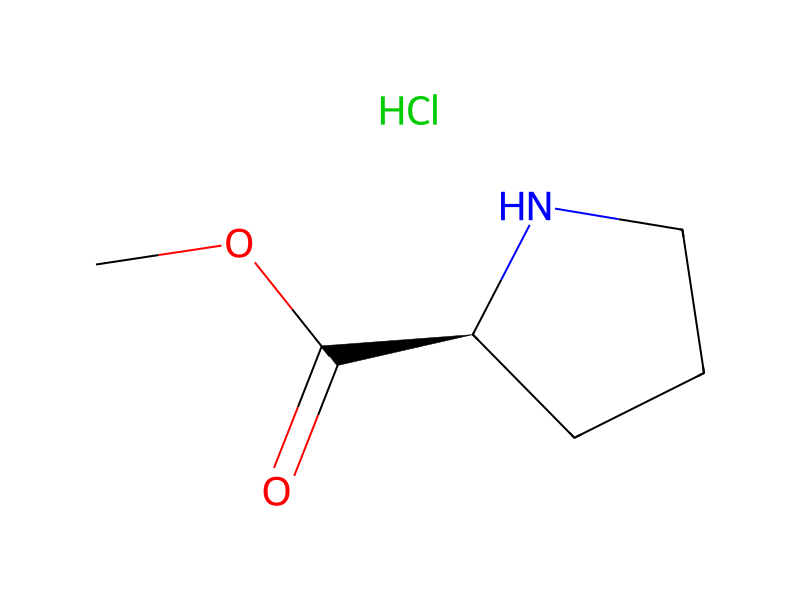
methyl L-prolinate hydrochloride → N-(N-(Phenylacetyl)-L-alaninyl]-L-proline Methyl Ester
Reaction equation

[C:1]1([CH2:7][C:8]([NH:10][C@H:11]([C:13]([OH:15])=O)[CH3:12])=[O:9])[CH:6]=[CH:5][CH:4]=[CH:3][CH:2]=1.Cl.[CH3:17][O:18][C:19](=[O:25])[C@@H:20]1[CH2:24][CH2:23][CH2:22][NH:21]1>>[CH3:17][O:18][C:19](=[O:25])[C@@H:20]1[CH2:24][CH2:23][CH2:22][N:21]1[C:13](=[O:15])[C@H:11]([CH3:12])[NH:10][C:8](=[O:9])[CH2:7][C:1]1[CH:2]=[CH:3][CH:4]=[CH:5][CH:6]=1Participants
3


Procedure
Following General Procedure A and using N-(phenylacetyl)-L-alanine (from Example B1 above) and L-proline methyl ester hydrochloride (Bachem), the title compound was prepared as an oil. The reaction was monitored by tlc (Rf=0.12 in 50% EtOAc/hexanes).
Sources & evidence
- ORD record
- ord-53cba3e076b0424c9e6b75284faf1137
- Source dataset
- uspto-grants-2005_05
- Patent number
- US06888022B2
Reaction notes
Loading…