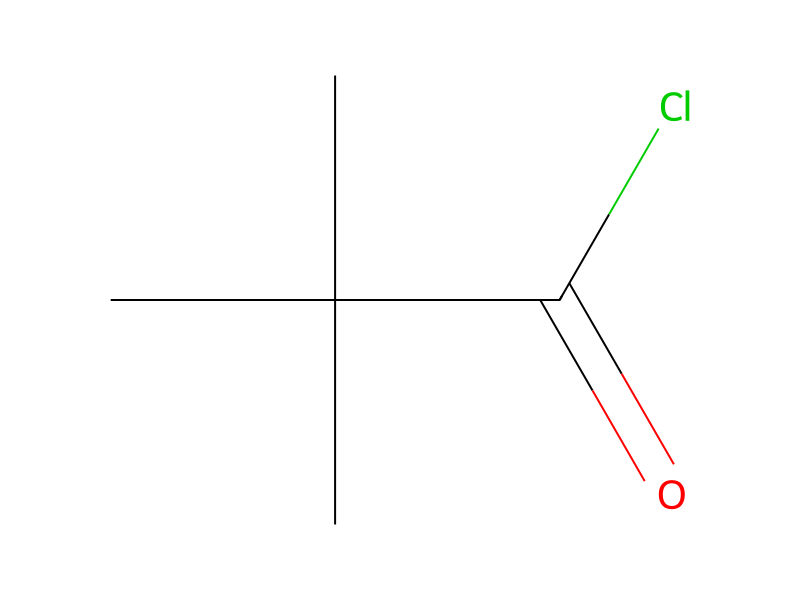
Pivaloyl chloride → N-(4-Bromo-2,5-xylyl)pivalamide
HRID 2181587
Reaction equation

[Br:1][C:2]1[CH:3]=[C:4]([CH3:10])[C:5](=[CH:7][C:8]=1[CH3:9])[NH2:6].[C:11](Cl)(=[O:16])[C:12]([CH3:15])([CH3:14])[CH3:13]>N1C=CC=CC=1>[Br:1][C:2]1[C:8]([CH3:9])=[CH:7][C:5]([NH:6][C:11](=[O:16])[C:12]([CH3:15])([CH3:14])[CH3:13])=[C:4]([CH3:10])[CH:3]=1Participants
4
Reactant 2

Product 1

Reagents, catalysts & solvents 1

Procedure
To a solution of 4-bromo-2,5-xylidine (8 g) in pyridine (60 ml) was added pivaloyl chloride (4.7 ml) at room temperature. After 30 minutes, the mixture was poured into dilute hydrochloric acid/ice solution. The precipitate was filtered and washed with water to give the title product.