Thionyl Chloride → 1-(Trifluoroacetyl)-2,3-dihydro-1H-indole-5-sulfonyl chloride
Reaction equation

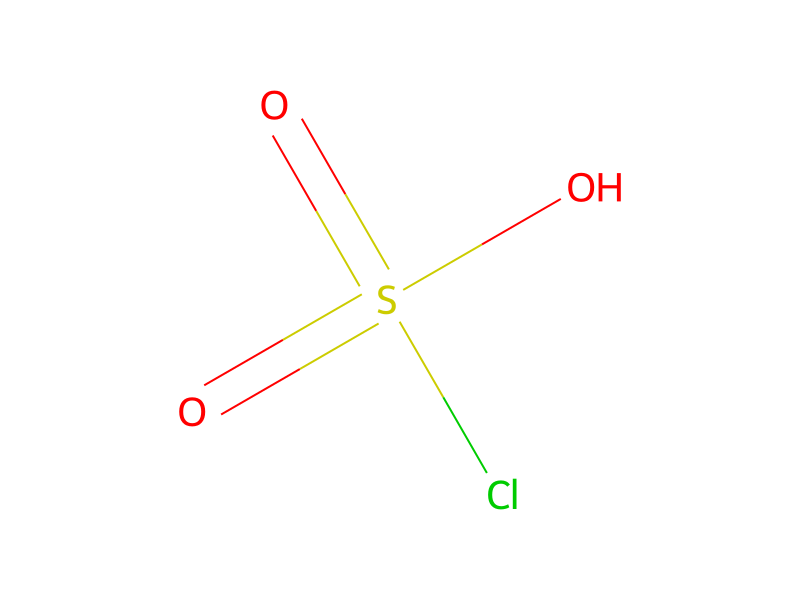
[F:1][C:2]([F:15])([F:14])[C:3]([N:5]1[C:13]2[C:8](=[CH:9][CH:10]=[CH:11][CH:12]=2)[CH2:7][CH2:6]1)=[O:4].S(Cl)(Cl)=O.[Cl:20][S:21](O)(=[O:23])=[O:22]>>[F:15][C:2]([F:1])([F:14])[C:3]([N:5]1[C:13]2[C:8](=[CH:9][C:10]([S:21]([Cl:20])(=[O:23])=[O:22])=[CH:11][CH:12]=2)[CH2:7][CH2:6]1)=[O:4]Participants
4



Procedure
A solution of the 1-(trifluoroacetyl)indoline (2-1, 21.5 g), neat in thionyl chloride (65.59 mL, 899.24 mmol), was cooled to 0° C. and treated with chlorosulfonic acid (13.28 mL, 199.83 mmol). The solution was stirred for 50 minutes, then poured directly into a beaker of ice (3 L). The precipitate was filtered and vacuum dried to afford 1-(trifluoroacetyl)indoline-5-sulfonyl chloride (2-2) as an orange solid; 1H NMR (500 MHz, CDCl3) δ 8.42 (d, 1H, J=8.5 Hz), 8.00 (d, 1H, J=6.7 Hz), 7.92 (s, 1H), 4.43 (t, 2H, J=8.2 Hz), 3.41 (t, 2H, J=8.2 Hz).