Potassium borohydride → 1,3-Dioxolane-4,5-dimethanol, 2,2-dimethyl-, (4R,5R)-
HRID 2231624
Reaction equation

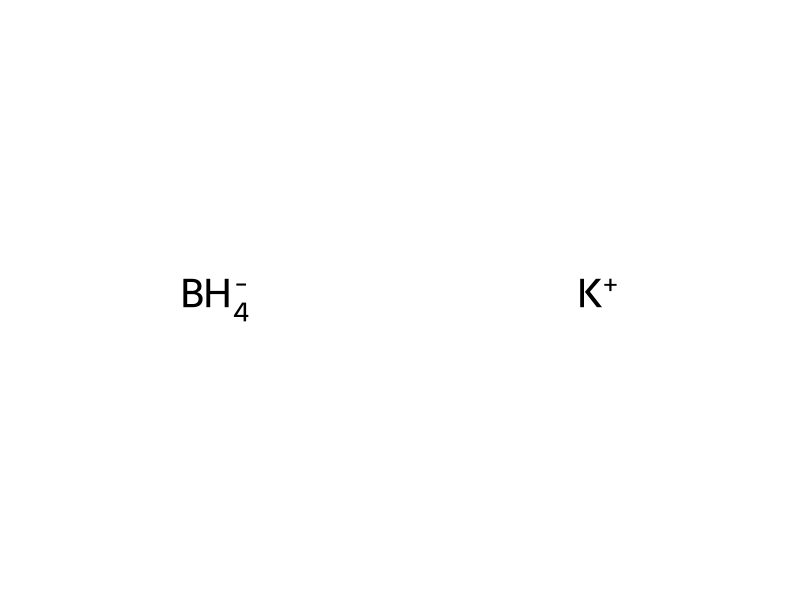
[CH3:1][C:2]1([CH3:15])[O:6][C@H:5]([C@H:7]([OH:10])CO)[C@@H:4]([C@H:11]([OH:14])CO)[O:3]1.I([O-])(=O)(=O)=O.[Na+].[BH4-].[K+]>>[CH3:1][C:2]1([CH3:15])[O:3][C@H:4]([CH2:11][OH:14])[C@@H:5]([CH2:7][OH:10])[O:6]1Participants
4


Procedure
The starting material (1) (3,4-O-isopropylidene-D-mannitol) was reacted with sodium periodate and potassium borohydride as described in J. Chem. Soc., Perkin Trans. I., 1972, 275 (the contents of which are herein incorporated by reference) to yield compound (2) in 92% yield. Compound (2) (5.1 g) was dissolved in pyridine (40 ml) and cooled in ice. To this solution was added methanesulphonyl chloride (18 ml), dropwise with stirring. The mixture was allowed to stand at room temperature for 3 hours, after which time it was added to a solution of sodium bicarbonate. This solution was then extracted with dichloromethane (5×50 ml) and the combined extracts were dried (MgSO4) and concentrated in vacuo. The residue obtained was recrystallised from ethanol to give 2,3-O-isopropylidene-1,4-di-O-methanesulphonyl-D-threitol (3), (6.6 g, 66%), m.p. 83°-85° C.