2-Chloroethanol → 2-[(1,3,4,5-Tetrahydro-7,8-dimethoxy-2-benzoxepin-1-yl)methoxy]ethyl chloride
Reaction equation

Br[CH2:2][CH:3]1[C:9]2[CH:10]=[C:11]([O:16][CH3:17])[C:12]([O:14][CH3:15])=[CH:13][C:8]=2[CH2:7][CH2:6][CH2:5][O:4]1.[Cl:18][CH2:19][CH2:20][OH:21].C(=O)([O-])[O-].[Ba+2]>C(O)C>[CH3:15][O:14][C:12]1[C:11]([O:16][CH3:17])=[CH:10][C:9]2[CH:3]([CH2:2][O:21][CH2:20][CH2:19][Cl:18])[O:4][CH2:5][CH2:6][CH2:7][C:8]=2[CH:13]=1Participants
5
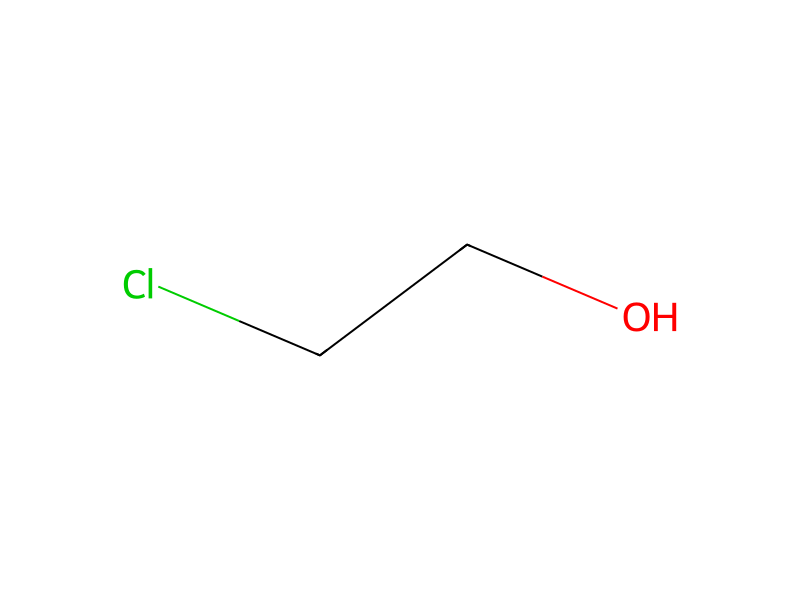



Procedure
A mixture of 10.33 g (0.343 moles) of 1-bromomethyl-1,3,4,5-tetrahydro-7,8-dimethoxy-2-benzoxepin, 10 ml of 2-chloroethanol, and 6.77 g of barium carbonate is stirred at 90° for 46 hours. The reaction mixture is then cooled, ethanol is added, and the solids are removed by filtration. The filtrate is taken to dryness in vacuo and the resulting oil is extracted with methylene chloride and aqueous sodium bicarbonate. The organic layer is then taken to dryness and chromatographed on silica gel using 10 ethylacetate:Skellysolve B as eluent to give 4.18 g (41d) of 2-[(1,3,4,5-tetrahydro-7,8-dimethoxy-2-benzoxepin-1-yl)methoxy]ethyl chloride, m.p. 90°-91°.
Workup
- temperatureThe reaction mixture is then cooled
- customthe solids are removed by filtration
- extractionthe resulting oil is extracted with methylene chloride and aqueous sodium bicarbonate
- customchromatographed on silica gel using 10 ethylacetate
Sources & evidence
- ORD record
- ord-7d26f9b283994fa1853c4d94a9a4487c
- Source dataset
- uspto-grants-1982_10
- Patent number
- US04352805
Reaction notes
Loading…