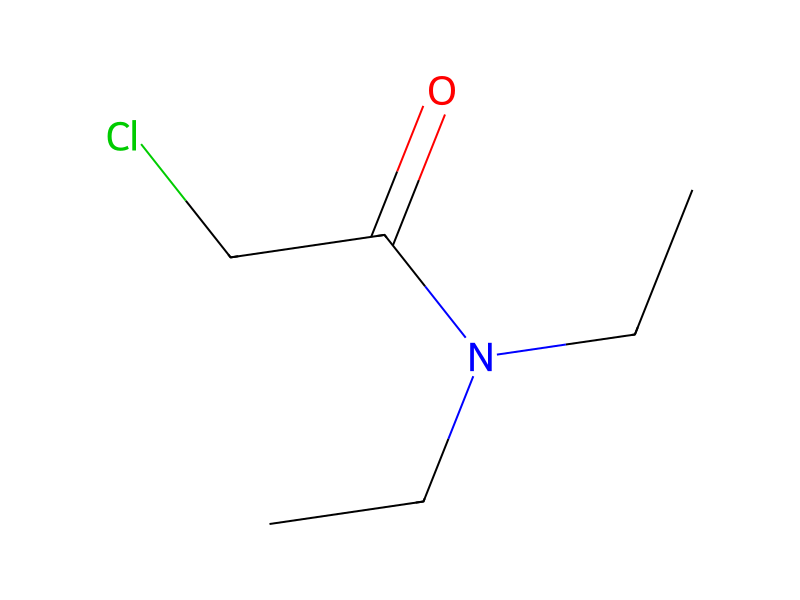
[C:1]1([C:7]2[N:16]=[C:15]([OH:17])[C:14]3[C:9](=[CH:10][CH:11]=[CH:12][CH:13]=3)[N:8]=2)[CH:6]=[CH:5][CH:4]=[CH:3][CH:2]=1.[CH2:18]([N:20]([CH2:25][CH3:26])[C:21](=[O:24])[CH2:22]Cl)[CH3:19].C(=O)([O-])[O-].[Na+].[Na+]>CC(=O)CC>[CH2:18]([N:20]([CH2:25][CH3:26])[C:21](=[O:24])[CH2:22][O:17][C:15]1[C:14]2[C:9](=[CH:10][CH:11]=[CH:12][CH:13]=2)[N:8]=[C:7]([C:1]2[CH:2]=[CH:3][CH:4]=[CH:5][CH:6]=2)[N:16]=1)[CH3:19]A mixture of 2-phenyl-4-quinazolinol (4.45 g), N,N-diethylchloroacetamide (3.3 g), sodium carbonate (4.25 g) and cuprous iodide (1 g) in 2-butanone (70 cc) is brought to boiling for 22 hours. The solvent is evaporated off under reduced pressure, water (100 cc) is added, the mixture is alkalinised with ammonia solution and the aqueous phase is extracted with methylene chloride (3×100 cc). The organic phase is dried over magnesium sulphate and evaporated to dryness under reduced pressure. The residue is chromatographed on silica gel with a cyclohexane/ethyl acetate (1:1 by volume) mixture as eluant. After crystatllization in isopropyl ether, N,N-diethyl-(2-phenyl-4-quinazolinyl)oxyacetamide (4 g), m.p. 113° C., is obtained.