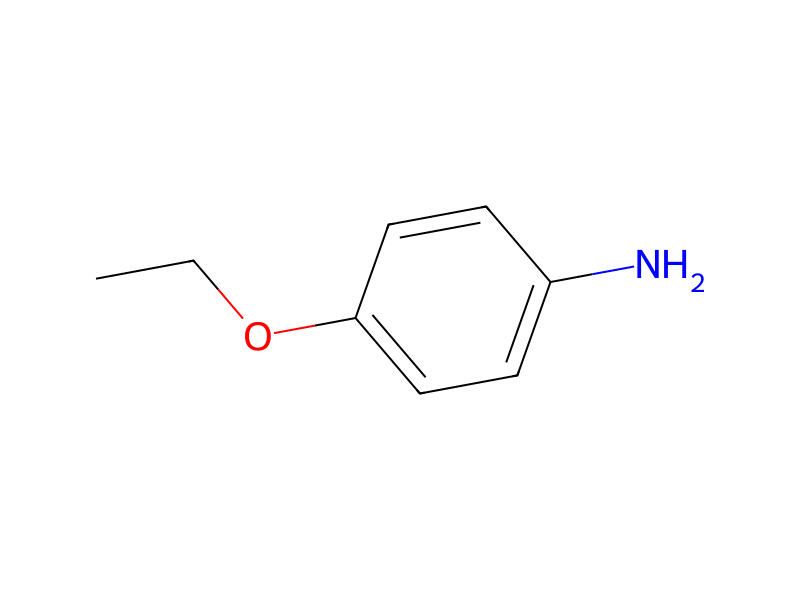
4-Ethoxyaniline → 6-chloro-N-(4-ethoxyphenyl)-7-phenylimidazo[1,2-b]pyridazin-8-amine
HRID 2239841
Reaction equation

Cl.Br[C:3]1[C:4]2[N:5]([CH:16]=[CH:17][N:18]=2)[N:6]=[C:7]([Cl:15])[C:8]=1[C:9]1[CH:14]=[CH:13][CH:12]=[CH:11][CH:10]=1.[CH3:19][CH2:20][O:21][C:22]1[CH:23]=[CH:24][C:25]([NH2:28])=[CH:26][CH:27]=1.CC([O-])(C)C.[K+]>>[Cl:15][C:7]1[C:8]([C:9]2[CH:14]=[CH:13][CH:12]=[CH:11][CH:10]=2)=[C:3]([NH:28][C:25]2[CH:24]=[CH:23][C:22]([O:21][CH2:20][CH3:19])=[CH:27][CH:26]=2)[C:4]2[N:5]([CH:16]=[CH:17][N:18]=2)[N:6]=1Participants
4



Procedure
To a solution of 8-bromo-6-chloro-7-phenylimidazo[1,2-b]pyridazine HCl salt (0.0431 g, 0.125 mmol) from 1c and 4-ethoxyaniline (0.31 M in THF, 0.40 mL) under nitrogen at 0° C. was added KOtBu (1 N in THF, 0.32 mL, 0.32 mmol). After 1 min, the cold bath was removed, and the reaction mixture was stirred to room temperature for 1 h. After concentrating in vacuo, the residue was taken up in CH2Cl2 and water, and the layers were separated. The aqueous layer was extracted with CH2Cl2 (2×). The organic layers were combined, dried over Na2SO4, filtered, and concentrated in vacuo. Trituration with hexanes provided 6-chloro-N-(4-ethoxyphenyl)-7-phenylimidazo[1,2-b]pyridazin-8-amine (0.0334 g).