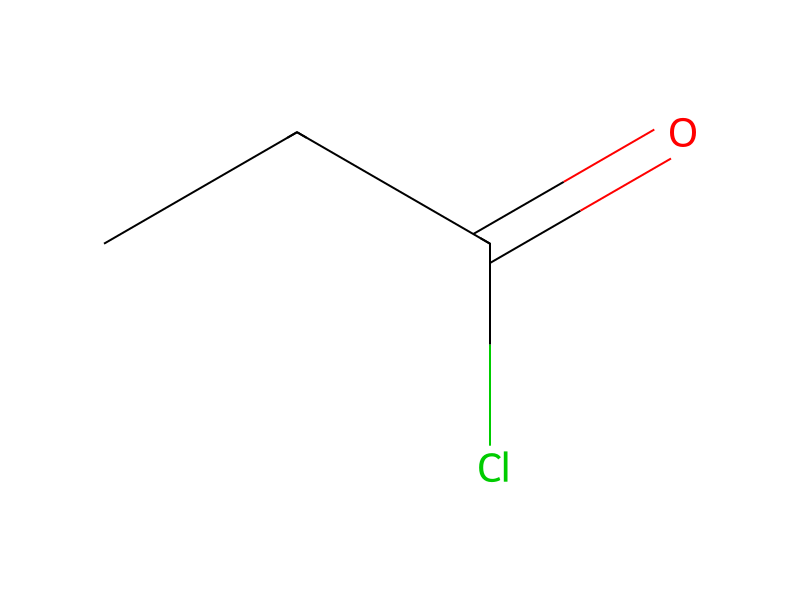
[NH2:1][C:2]1[S:3][CH:4]=[C:5]([CH2:7][C:8](=[O:18])[N:9]([C:11]2[CH:16]=[CH:15][C:14]([Cl:17])=[CH:13][CH:12]=2)[CH3:10])[N:6]=1.N1C=CC=CC=1.[C:25](Cl)(=[O:28])[CH2:26][CH3:27]>COCCOC>[Cl:17][C:14]1[CH:15]=[CH:16][C:11]([N:9]([CH3:10])[C:8]([CH2:7][C:5]2[N:6]=[C:2]([NH:1][C:25](=[O:28])[CH2:26][CH3:27])[S:3][CH:4]=2)=[O:18])=[CH:12][CH:13]=1A 300 ml reaction flask was charged with 6.0 g (0.021 mole) of 2-amino-4-[N-4-chlorophenyl-N-methyl(carbamoylmethyl)] thiazole, 100 ml of 1,2-dimethoxyethane and 2.6 g (0.03 mole) of pyridine. The propionyl chloride (2.8 g, 0.03 mole) which was dissolved in 15 ml of 1,2-dimethoxyethane was added portionwise and the reaction solution was heated at 65° for two hours. The solvent was evaporated and the residue was dissolved in ethyl acetate. The organic phase was extracted with water and dried over sodium sulfate. After evaporating most of the ethyl acetate, hexane was added. There was obtained 3.7 g (51%) of product, M.P. 153°-5°. N.M.R. (CDCl3) ∂1.2-1.4 (CH3), 2.3-2.5 (CH2), 3.3 (NCH3), 3.5 (0=CCH2), 6.5 (hetero-aromatic) 7.2-7.4 (aromatic).