Sodium Azide → 4-Azido-5,6-diphenyl-2-(trifluoromethyl)pyrimidine
HRID 2250330
Reaction equation

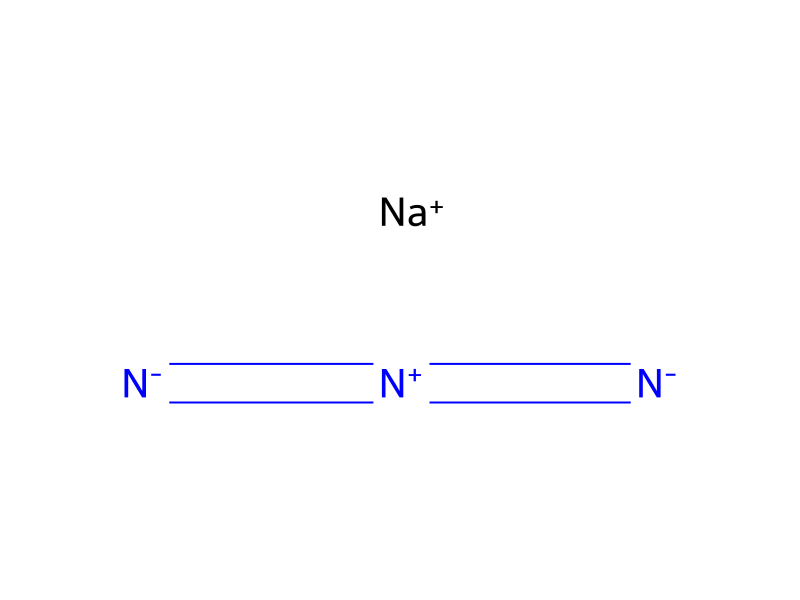
Cl[C:2]1[C:7]([C:8]2[CH:13]=[CH:12][CH:11]=[CH:10][CH:9]=2)=[C:6]([C:14]2[CH:19]=[CH:18][CH:17]=[CH:16][CH:15]=2)[N:5]=[C:4]([C:20]([F:23])([F:22])[F:21])[N:3]=1.[N-:24]=[N+:25]=[N-:26].[Na+]>C(O)C>[N:24]([C:2]1[C:7]([C:8]2[CH:13]=[CH:12][CH:11]=[CH:10][CH:9]=2)=[C:6]([C:14]2[CH:19]=[CH:18][CH:17]=[CH:16][CH:15]=2)[N:5]=[C:4]([C:20]([F:23])([F:22])[F:21])[N:3]=1)=[N+:25]=[N-:26]Participants
4
Reactant 2

Product 1

Reagents, catalysts & solvents 1

Procedure
4-Chloro-5,6-diphenyl-2-(trifluoromethyl)pyrimidine (0.5 g, 1.5 mmol) (synthesized according to the procedure described in example 1) was refluxed in ethanol (10 ml) containing sodium azide (0.1 g, 1.5 mmol) for 8 hours and allowed to cool to room temperature. The reaction mixture was poured onto ice-water mixture. The solid thus separated was extracted with ethyl acetate. The organic extract was washed with water, dried over anhydrous sodium sulphate and concentrated under reduced pressure to afford the title compound (0.45 g, 88.3%, HPLC purity 98.5%), mp: 126-128° C.