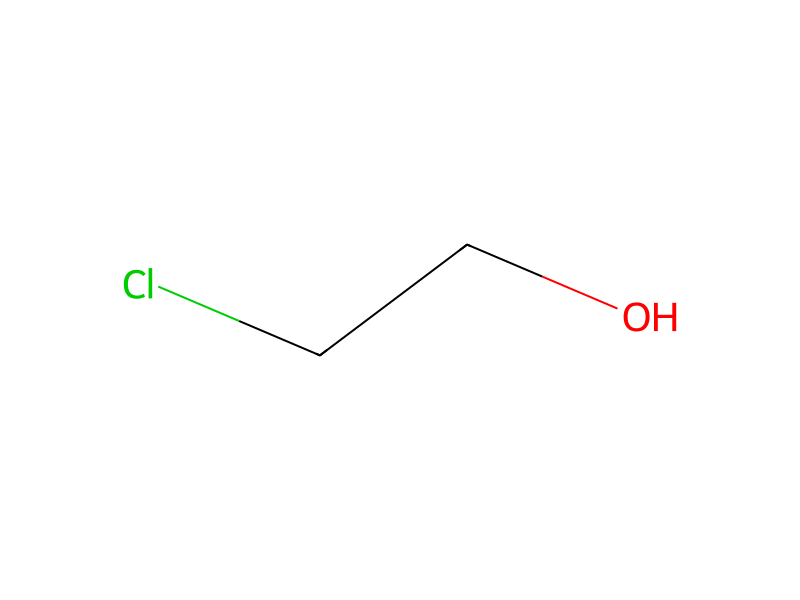
In a mixed solution of 100 ml of ethanol and 60 ml of a 2N-NaOH solution were dissolved 12.3 g of the 3,5-dimethyl-4-fluoroaniline and 81 g of 2-chloroethanol, and the resulting solution was subjected to reaction with refluxing for 3 hours. After completion of the reaction, the ethanol was distilled off and the residue was extracted with ethyl acetate, after which the extract was washed with water, dried and then concentrated to obtain 14 g of crude N-(2-hydroxyethyl)-3,5-dimethyl-4-fluoroaniline. Subsequently, this crude compound was dissolved in 100 ml of isopropanol, followed by adding thereto 15 g of iodoethane and 20 g of potassium carbonate, and the reaction was carried out with refluxing for 5 hours. After completion of the reaction, the solvent was distilled off and the residue was extracted with ethyl acetate, and the extract was washed with water, dried and then concentrated to obtain 16 g of a crude product of the desired compound. The crude product was purified by a column chromatography (packing; Wakogel C-300, a registered trade name, mfd. by Wako Pure Chemical Industries, Ltd., eluent: ethyl acetate : n-hexane =1 : 2) to obtain 9.5 g of oily N-ethyl-N-(2-hydroxyethyl)-3,5-dimethyl-4-fluoroaniline.