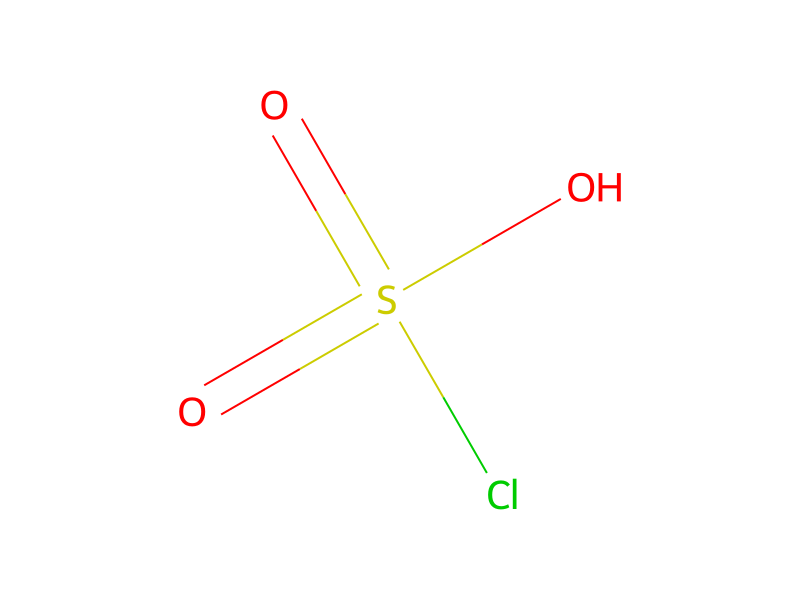
211 g (1 mol) of 2-chloro-4,5-difluorobenzoyl chloride are introduced into 500 g of chlorosulfonic acid, and 3 g of iodine are added. The mixture is chlorinated (10 l/h) for 1.7 h at 40° C. and then diluted with water (500 g), with stirring, the temperature being allowed to rise to 80° C. In this procedure, the acid chlorides initially present in the solvent are hydrolyzed in 2 h to the carboxylic acids, which are isolated by filtration after cooling to 0° C. After drying, the mixture is reacted with thionyl chloride (2 mol) at 80° C. and excess thionyl chloride is then distilled off. The mixture is then distilled, as indicated in Example 1, to give 46.4 g (0.22 mol, 22%) of 2-chloro-4,5-difluorobenzoyl chloride and 174.9 g (0.71 mol, 71%) of 2,3-dichloro-4,5-difluorobenzoyl chloride.