Reaction equation

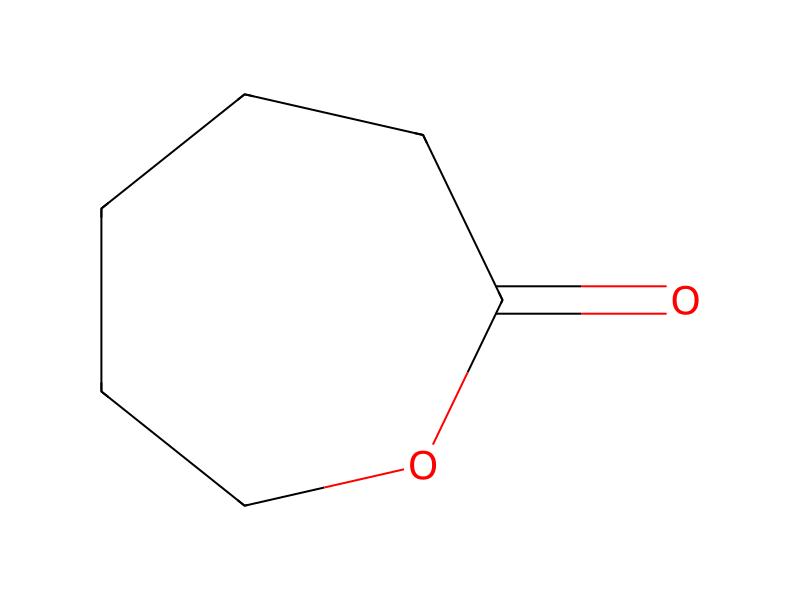
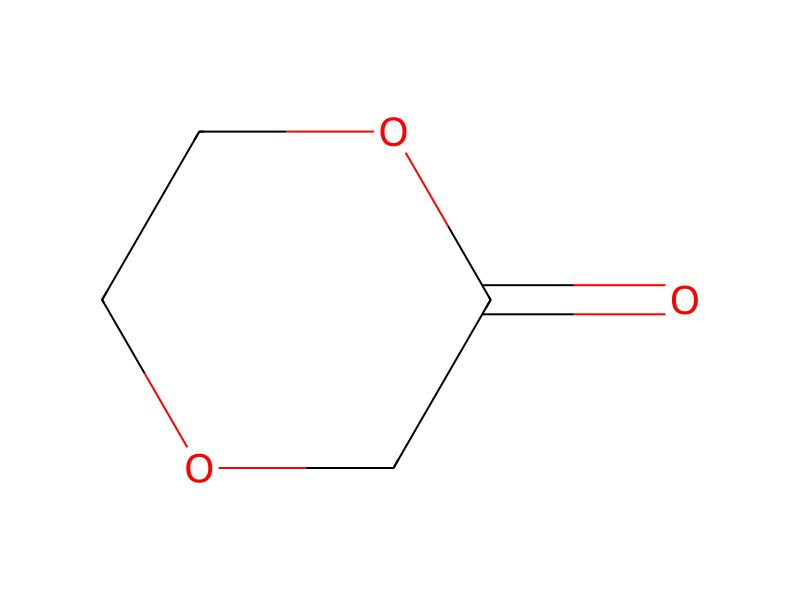
[C:1]1(=[O:8])[O:7][CH2:6][CH2:5][CH2:4][CH2:3][CH2:2]1.[O:9]1[CH2:14][CH2:13][O:12][CH2:11][C:10]1=[O:15]>>[C:1]1(=[O:8])[O:7][CH2:6][CH2:5][CH2:4][CH2:3][CH2:2]1.[O:9]1[CH2:14][CH2:13][O:12][CH2:11][C:10]1=[O:15]Participants
3

Procedure
The procedure in Example 5A was substantially repeated, except that 68.48 grams (0.60 mole) of ε-caprolactone and 40.83 grams (0.40 mole) of p-dioxanone were used. The copolymer was dried under vacuum (0.1 mm Hg) at 80° C. for about 80 hours to remove any unreacted monomer. The copolymer had an inherent viscosity of 0.19 dL/g in HFIP at 25° C. The copolymer was a liquid at room temperature. The molar ratio of PCL/PDS was found to be 57.2/42.8 by proton NMR.
Workup
- customThe copolymer was dried under vacuum (0.1 mm Hg) at 80° C. for about 80 hours
- customto remove any unreacted monomer
- customat 25° C
- customat room temperature
Sources & evidence
- ORD record
- ord-d7d2ca3c29b649f5856b09db139c04ce
- Source dataset
- uspto-grants-1998_03
- Patent number
- US05728752
Linked notes
Loading…