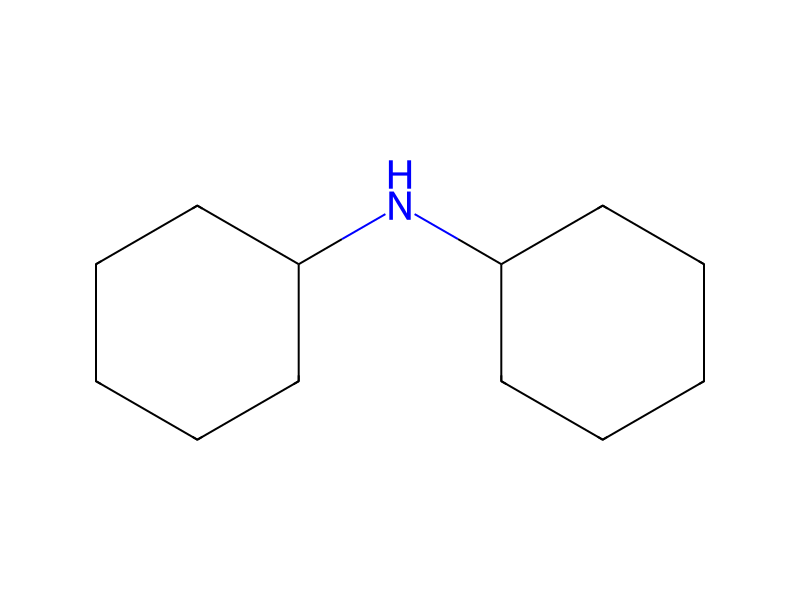
[CH3:1][C:2]1([CH3:19])[CH2:11][CH2:10][C:9]([CH3:13])([CH3:12])[C:8]2[CH:7]=[C:6]([CH:14]=[CH:15][C:16](O)=[O:17])[CH:5]=[CH:4][C:3]1=2.C1(NC2CCCCC2)CCCCC1.S(Cl)([Cl:35])=O>ClCCl>[CH3:1][C:2]1([CH3:19])[CH2:11][CH2:10][C:9]([CH3:13])([CH3:12])[C:8]2[CH:7]=[C:6]([CH:14]=[CH:15][C:16]([Cl:35])=[O:17])[CH:5]=[CH:4][C:3]1=2A solution of 2.6 g (10 mmol) of 3-(5,6,7,8-tetrahydro-5,5,8,8-tetramethyl-2-naphthyl)acrylic acid in 50 ml of anhydrous dichloromethane is introduced into a round-bottomed flask, 2 ml (10 mmol) of dicyclohexylamine are added and the mixture is stirred for one hour. 800 μl (10 mmol) of thionyl chloride are then added and the mixture is stirred for one hour. The mixture is evaporated to dryness, the residue is taken up in anhydrous ethyl ether, the dicyclohexylamine salt is filtered off and the filtrate is evaporated. 2.8 g (100%) of the crude acid chloride are collected, which product will be used subsequently without further purification.