HomeMCPWorkbenchSkills
HomeWorkbenchNotificationsMe
llms.txt · MCP GuidePrivacy Policy · Terms of Service · Supportv1.8.3
  1. Home
  2. /Reaction

Sodium Hydroxide → 4-Bromo-1-N-isopropylbenzene-1,2-diamine

HRID 2273599
Print

Reaction equation

HRID 2273599 reaction equation
[Sn](Cl)Cl.[Br:4][C:5]1[CH:14]=[CH:13][C:8]([NH:9][CH:10]([CH3:12])[CH3:11])=[C:7]([N+:15]([O-])=O)[CH:6]=1.[OH-].[Na+]>C(O)C>[Br:4][C:5]1[CH:6]=[C:7]([NH2:15])[C:8]([NH:9][CH:10]([CH3:11])[CH3:12])=[CH:13][CH:14]=1
ParticipantsProcedureWorkupSources & evidenceReaction notes

Participants

5

Reactant 3

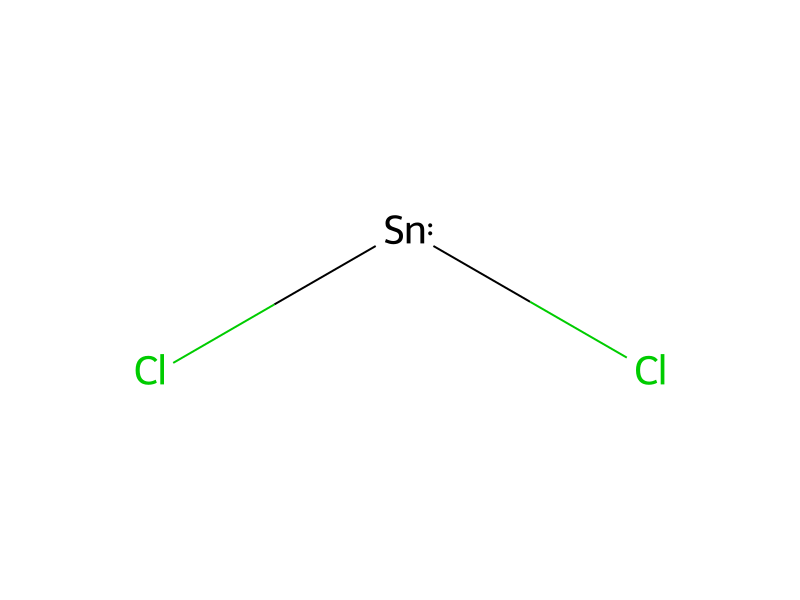
HCID 14798Sodium HydroxideHCID 24479Stannous ChlorideHCID 2759489N-Isopropyl 4-bromo-2-nitroaniline

Product 1

HCID 337851464-Bromo-1-N-isopropylbenzene-1,2-diamineYield 75.4%

Reagents, catalysts & solvents 1

HCID 702EthanolSolvent

Procedure

Tin(II) chloride (1.69 g, 8.90 mmol) is added to a solution of 4-bromo-N-isopropyl-2-nitroaniline (770 mg, 2.97 mmol) in ethanol. The mixture may be heated to reflux for an appropriate time (such as 4 hr) and cooled. 4 N sodium hydroxide is added to the solution which then may be filtered. The filtrate is extracted with ethyl acetate. The combined organic layer may be washed with brine and concentrated. The residue may be purified by any appropriate method including Biotage column chromatography to give 4-bromo-N-1-isopropylbenzene-1,2-diamine (513 mg).

Workup

  1. temperatureThe mixture may be heated
  2. temperatureto reflux for an appropriate time (such as 4 hr)
  3. temperaturecooled
  4. filtrationmay be filtered
  5. extractionThe filtrate is extracted with ethyl acetate
  6. washThe combined organic layer may be washed with brine
  7. concentrationconcentrated
  8. customThe residue may be purified by any appropriate method

Sources & evidence

ORD record
ord-50117e9834364446a613ddda7fb0c1f0
Source dataset
uspto-grants-2015_09
DOI
10.6084/m9.figshare.5104873.v1
Patent number
US09125901B2

Reaction notes

On this pageParticipantsProcedureWorkupSources & evidenceReaction notes