Reaction equation

[Cl-].[NH4+].ClCCl.[Br:6][C:7]1[CH:8]=[C:9]([OH:13])[CH:10]=[CH:11][CH:12]=1.Cl[C:15]([CH3:23])([CH2:17][CH2:18][C:19](Cl)([CH3:21])[CH3:20])[CH3:16]>O>[Br:6][C:7]1[CH:8]=[C:9]([OH:13])[C:10]2[C:15]([CH3:23])([CH3:16])[CH2:17][CH2:18][C:19]([CH3:21])([CH3:20])[C:11]=2[CH:12]=1Participants

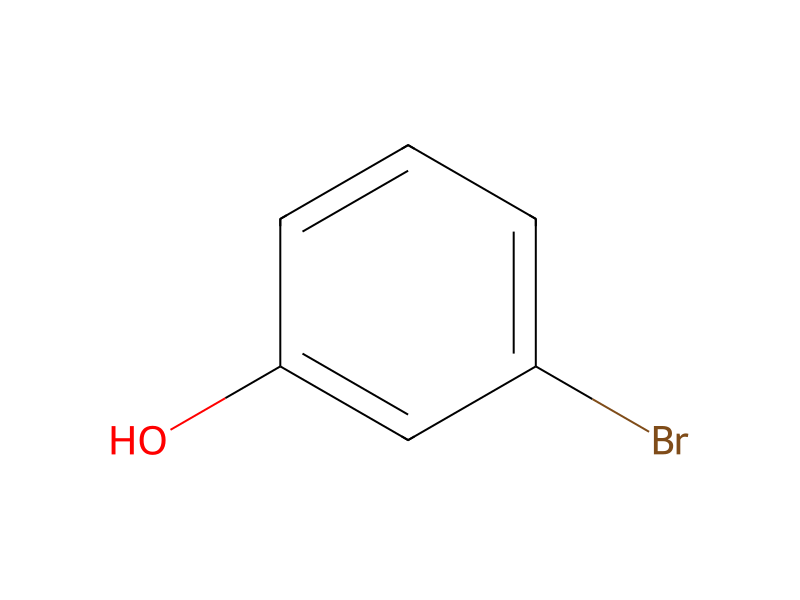




Procedure
13.40 g (100.0 mmol) of ammonium chloride and 100 ml of dichloromethane are introduced into a three-necked flask under an argon atmosphere. A solution composed of 34.60 g (199.0 mmol) of 3-bromophenol, 89.00 g (486.0 mmol) of 2,5-dichloro-2,5-dimethylhexane and 300 ml of dichloromethane is added dropwise. The reaction mixture is stirred for sixteen hours at room temperature. The reaction mixture is poured into water and extracted with dichloromethane, the extract is washed with water and the organic phase is separated by settling, dried over magnesium sulphate and evaporated. The residue obtained is purified by chromatography on a silica column eluted with a mixture composed of 80% heptane and 20% dichloromethane. After evaporating the solvents, 30.00 g (53%) of the expected compound are collected in the form of white crystals with a melting point of 93° C.
Workup
- additionis added dropwise
- extractionextracted with dichloromethane
- washthe extract is washed with water
- customthe organic phase is separated
- dry with materialdried over magnesium sulphate
- customevaporated
- customThe residue obtained
- customis purified by chromatography on a silica column
- washeluted with a mixture
- customAfter evaporating the solvents, 30.00 g (53%) of the expected compound
- customare collected in the form of white crystals with a melting point of 93° C.
Sources & evidence
- ORD record
- ord-99e55126c38b44819539451eb4d235a6
- Source dataset
- uspto-grants-2005_02
- Patent number
- US06849658B2
Linked notes
Loading…