Acetone → 6-Bromo-1,2,3,4-tetrahydroquinoline-N-propanesulphonic acid
Reaction equation

[Br:1][C:2]1[CH:3]=[C:4]2[C:9](=[CH:10][CH:11]=1)[NH:8][CH2:7][CH2:6][CH2:5]2.CC(C)=O.[CH2:16]1[S:20](=[O:22])(=[O:21])[O:19][CH2:18][CH2:17]1>CO>[Br:1][C:2]1[CH:3]=[C:4]2[C:9](=[CH:10][CH:11]=1)[N:8]([CH2:18][CH2:17][CH2:16][S:20]([OH:22])(=[O:21])=[O:19])[CH2:7][CH2:6][CH2:5]2Participants
5
Reactant 3

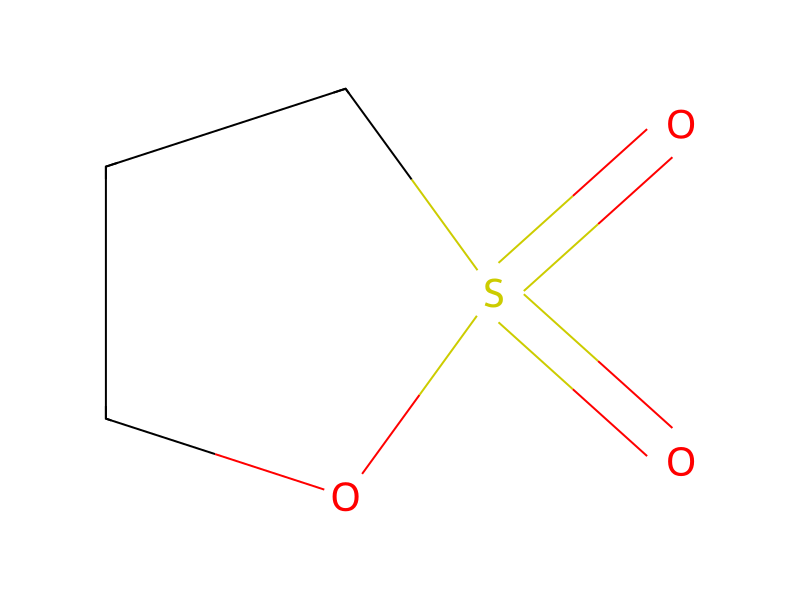

Product 1

Reagents, catalysts & solvents 1

Procedure
4.2 g of the 6-bromo-1,2,3,4-tetra-hydroquinoline obtained according to a) above were dissolved in 0 ml. acetone and, while stirring at 50° C., 2.44 g. molten propane-1,3-sultone, dissolved in 20 ml. acetone, were added dropwise within the course of 30 minutes. After boiling under reflux for 24 hours, a further 2.44 g. molten propanesultone, dissolved in 20 ml. acetone, were added dropwise under the same conditions. After boiling under reflux for 48 hours, the reaction mixture was subjected to column chromatography (silica gel; elution agent chloroform/methanol=1/1 v/v; 25 ml. fractions); fractions 6-10 were evaporated in a vacuum at 35° C., the 1.8 g. of red-brown residue obtained was stirred with about 20 ml. methanol and 1.05 g of sand-coloured crystals were obtained; m.p. 217° C. (decomp.).