Reaction equation

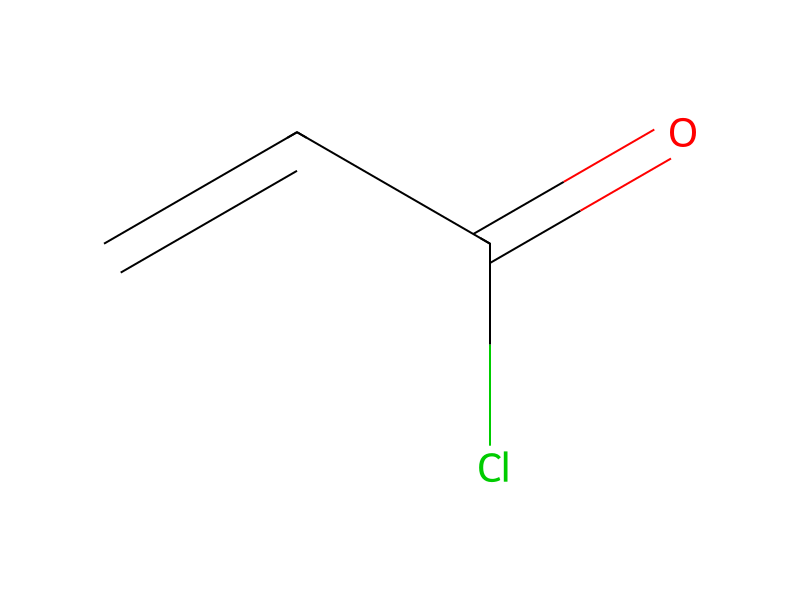
[C:1](Cl)(=[O:4])[CH:2]=[CH2:3].[NH2:6][CH2:7][CH2:8][NH:9][CH2:10][CH2:11][NH2:12]>CCCCCC.ClCCl>[C:1]([N:9]([CH2:10][CH2:11][NH2:12])[CH2:8][CH2:7][NH2:6])(=[O:4])[CH:2]=[CH2:3]Participants
Reactant 2

Product 1

Reagents, catalysts & solvents 2


Conditions
- Temperature
- 105 °C
Procedure
4-N-acryloyl-diethylenetriamine was prepared by slowly adding, at 23° C., 200 ml of a solution of acryloyl chloride in a mixture of hexane and dichloromethane (C6H14 :C2Cl2 =3:1) at a concentration of 3.6 wt% (0.4 mEq/ml) to 600 ml of 1.4 wt% (0.4 mEq/ml) diethylenetriamine which had been purified by vacuum distillation. The reaction product was oligomerized by the addition of 200 ml of a 4.1 wt% solution of isophthaloyl chloride in dichloromethane at 20° C. with mechanical stirring. An asymmetric microporous polysulfone support flat sheet membrane 4 mils thick was immersed in a 2 wt% aqueous solution of 4-N-acryloyl-diethylenetriamine oligomer, drained of excess solution, then immersed in a 0.5 wt% solution of trimesoyl chloride at 20° C. for 30 seconds. The composite membrane was then air-dried at room temperature for 30 minutes and subjected to heat treatment at 105° C. for 10 minutes.
Workup
- additionby slowly adding, at 23° C.
- distillationhad been purified by vacuum distillation
- additionThe reaction product was oligomerized by the addition of 200 ml of a 4.1 wt% solution of isophthaloyl chloride in dichloromethane at 20° C. with mechanical stirring
- customThe composite membrane was then air-dried at room temperature for 30 minutes
Sources & evidence
- ORD record
- ord-640bd2338aae4a3fac9de792c9228c82
- Source dataset
- uspto-grants-1989_07
- Patent number
- US04851127
Linked notes
Loading…