Reaction equation
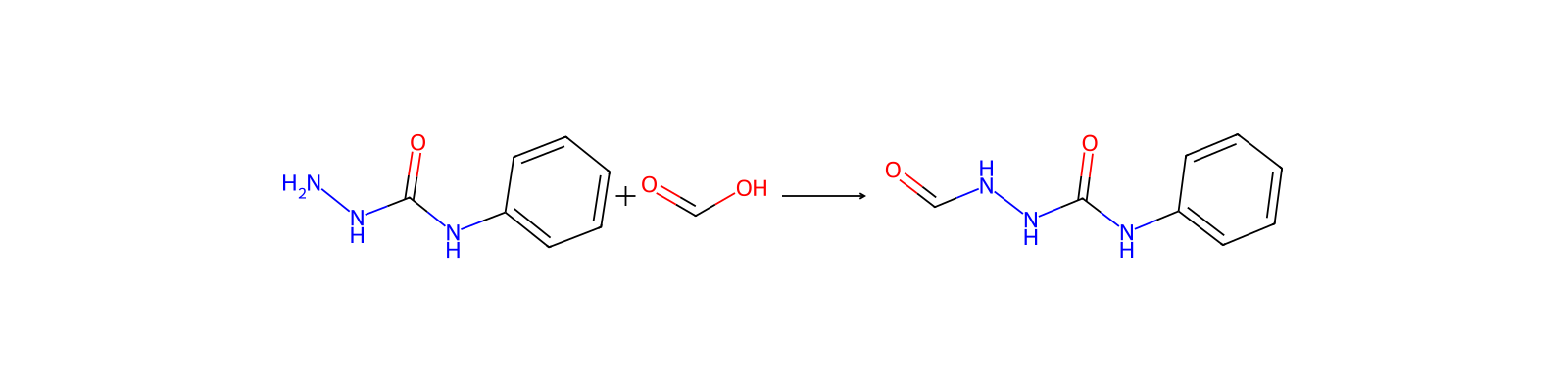
[C:1]1([NH:7][C:8](=[O:11])[NH:9][NH2:10])[CH:6]=[CH:5][CH:4]=[CH:3][CH:2]=1.[CH:12](O)=[O:13]>>[CH:12]([NH:10][NH:9][C:8]([NH:7][C:1]1[CH:2]=[CH:3][CH:4]=[CH:5][CH:6]=1)=[O:11])=[O:13]Participants


Procedure
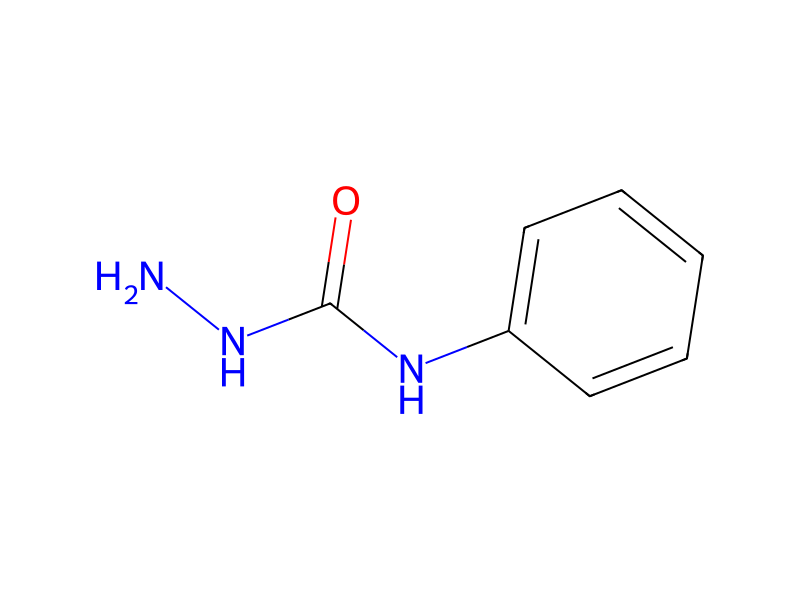
Other known methods for the preparation of 4-aryl-1,2,4-triazol-3-ones involve the use of hydrazine as a raw material. In one such method, phenylurea is reacted with hydrazine to give a 4-phenylsemicarbazide. The semicarbazide is then condensed with ethyl formate to give the 4-phenyltriazolone. The overall yield from this method is about 20%. In another method, a 4-phenylsemicarbazide is reacted with formic acid to form the 1-formyl-4-phenylsemicarbazide intermediate, followed by intramolecular condensation to the 4-phenyltriazolone. The yield obtained by this method is about 40%. In yet another method, a substituted aniline is converted to the phenylcarbamate derivative. The phenylcarbamate is treated with hydrazine to give the phenylsemicarbazide derivative, followed by condensation with formamidine acetate to give the 4-phenyltriazolone. Each of these methods requires the use of the toxic compound hydrazine. In addition, the methods suffer from low overall yield.
Workup
- customThe overall yield from this method
Sources & evidence
- ORD record
- ord-e99cd70b8d1c4b8eabefb6d92273d488
- Source dataset
- uspto-grants-1998_03
- Patent number
- US05728834
Linked notes
Loading…