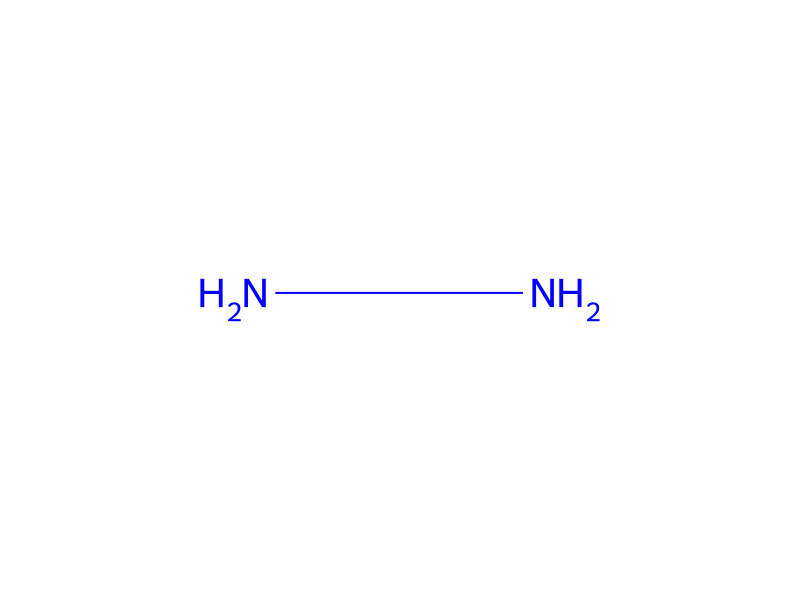
Hydrazine → 1-[4-[3-[4-(6-Fluoro-1,2-benzisoxazol-3-yl)-1-piperidinyl]propoxy]-3-methoxyphenyl]ethanone hydrazone
HRID 233174
Reaction equation

[F:1][C:2]1[CH:31]=[CH:30][C:5]2[C:6]([CH:9]3[CH2:14][CH2:13][N:12]([CH2:15][CH2:16][CH2:17][O:18][C:19]4[CH:24]=[CH:23][C:22]([C:25](=O)[CH3:26])=[CH:21][C:20]=4[O:28][CH3:29])[CH2:11][CH2:10]3)=[N:7][O:8][C:4]=2[CH:3]=1.[NH2:32][NH2:33]>C(O)C>[F:1][C:2]1[CH:31]=[CH:30][C:5]2[C:6]([CH:9]3[CH2:14][CH2:13][N:12]([CH2:15][CH2:16][CH2:17][O:18][C:19]4[CH:24]=[CH:23][C:22]([C:25](=[N:32][NH2:33])[CH3:26])=[CH:21][C:20]=4[O:28][CH3:29])[CH2:11][CH2:10]3)=[N:7][O:8][C:4]=2[CH:3]=1Participants
4
Reactant 2

Product 1

Reagents, catalysts & solvents 1

Procedure
A stirred mixture of 1-[4-[3-[4-(6-fluoro-1,2-benzisoxazol-3-yl)-1-piperidinyl]propoxy]-3-methoxyphenyl]ethanone (4.3 g, 10 mmol), prepared as in Example 3 above, hydrazine (0.8 g, 2.5 mmol), and ethanol (40 ml) was refluxed for 16 hours. The cooled solution was concentrated to yield an oily residue. The residue was triturated with water and the resultant solid was collected to afford 4.2 g of 1-[4-[3-[4-(6-fluoro-1,2-benzisoxazol-3-yl)-1-piperidinyl]propoxy]-3-methoxyphenyl]ethanone hydrazone as a yellow solid. The compound was recrystallized from isopropanol and then from toluene to afford 1.7 g (39%), m.p.=106°-108° C.