Reaction equation

[CH:1]1[CH:6]=[CH:5][CH:4]=[CH:3][CH:2]=1.[C:7]1(=[N:13][OH:14])[CH2:12][CH2:11][CH2:10][CH2:9][CH2:8]1.C1(S([O:24][CH2:25][CH2:26][CH2:27][CH2:28][CH2:29][CH2:30]CCCCCC)(=O)=[O:22])C=CC=CC=1.[Na]>S(=O)(=O)(O)O>[C:7]1(=[N:13][OH:14])[CH2:12][CH2:11][CH2:10][CH2:9][CH2:8]1.[C:1]1(=[O:22])[CH2:6][CH2:5][CH2:4][CH2:3][CH2:2]1.[C:25]1(=[O:24])[NH:13][CH2:30][CH2:29][CH2:28][CH2:27][CH2:26]1Participants
Reactant 3


Product 3
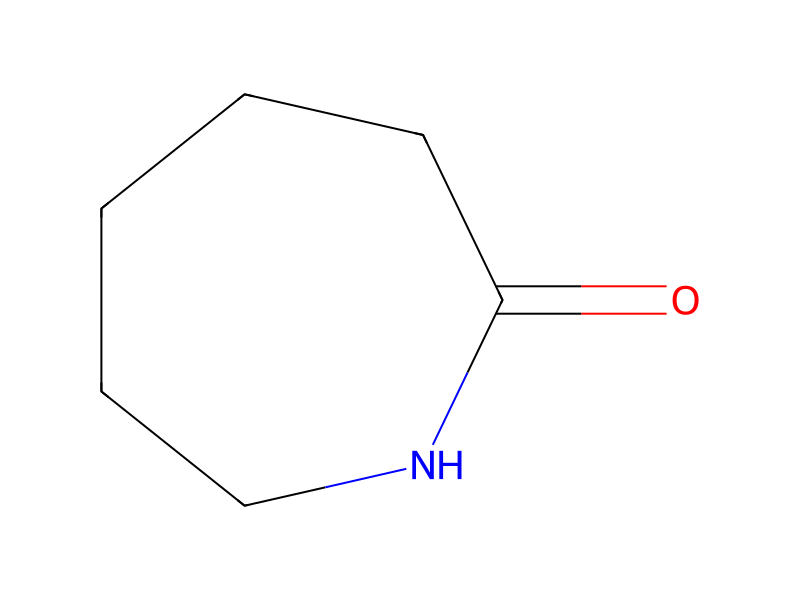

Reagents, catalysts & solvents 1

Conditions
- Temperature
- 40 °C
Procedure
Take 200 ml of aqueous solution of 2.16N sulfuric acid in a round bottom flask. Dissolve in this solution 6.8 gm of sodium dodecyl benzene sulfonate (SDBS) and 1.3 gm of benzene by mild stirring. Keep the flask in a water bath maintained at temperature of 40° C. A macroemulsions of benzene in sulfuric acid is formed. To this macroemulsion, add 14.0 gm of cyclohexanone oxime and stir for 21/2 hours. Neutralize the excess acid using Whatman No. 1 filter paper to remove or recycle the the unreacted cyclohexanone oxime. Separate the organic and aqueous layers of the filtrate. Wash the aqueous layer with 3×10 ml benzene and add the benzene washing with the main organic layer. Analyze the benzene layer, the aqueous layer and the unreacted cyclohexanone oxime as obtained above by Gas Chromatography for the amount of cyclohexanone oxime, cyclohexanone and caprolactam.
Workup
- filtration1 filter paper
- customto remove
- customSeparate the organic and aqueous layers of the filtrate
- washWash the aqueous layer with 3×10 ml benzene
- additionadd the benzene washing with the main organic layer
Sources & evidence
- ORD record
- ord-27284f3f9dc54790b074b4ef57dc8990
- Source dataset
- uspto-grants-1997_01
- Patent number
- US05594137
Linked notes
Loading…