HomeMCPWorkbenchSkills
HomeWorkbenchNotificationsMe
llms.txt · MCP GuidePrivacy Policy · Terms of Service · Supportv1.8.0
  1. Home
  2. /Reaction

L-Aspartic Acid → N-(4-nitrophenylcarbamoyl)-L-aspartic acid

HRID 236538
Notes
Print preview

Reaction equation

HRID 236538 reaction equation
[NH2:1][C@H:2]([C:7]([OH:9])=[O:8])[CH2:3][C:4]([OH:6])=[O:5].[N+:10]([C:13]1[CH:18]=[CH:17][C:16]([N:19]=[C:20]=[O:21])=[CH:15][CH:14]=1)([O-:12])=[O:11]>O.[OH-].[Na+].C1C=CC=CC=1>[N+:10]([C:13]1[CH:14]=[CH:15][C:16]([NH:19][C:20]([NH:1][C@H:2]([C:7]([OH:9])=[O:8])[CH2:3][C:4]([OH:6])=[O:5])=[O:21])=[CH:17][CH:18]=1)([O-:12])=[O:11]
ParticipantsProcedureWorkupSources & evidenceReaction notes

Participants

6

Reactant 2

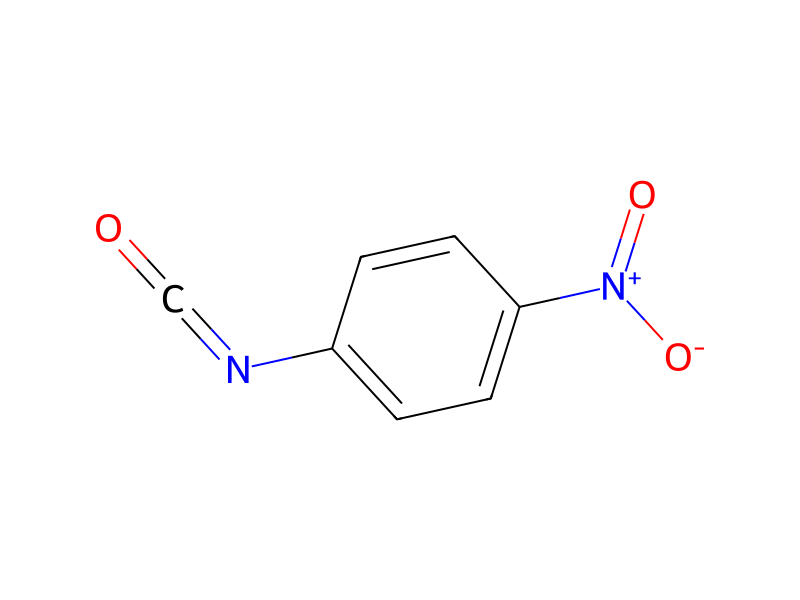
HCID 5960L-Aspartic AcidHCID 66012Benzene, 1-isocyanato-4-nitro-

Product 1

HCID 54062991N-(4-nitrophenylcarbamoyl)-L-aspartic acidYield 79.4%

Reagents, catalysts & solvents 3

HCID 241BenzeneSolventHCID 962WaterSolvent
HCID 14798
Sodium Hydroxide
Solvent
2×

Procedure

4.56 g (0.0568 mol) of L-aspartic acid are dissolved in water by addition of sodium hydroxide until a pH close to 10 is obtained. A solution of 10 g (0.0568 mol) of 4-nitrophenyl isocyanate in 50 cm3 of benzene is then added at room temperature. The solution is stirred vigorously for two hours whilst maintaining the pH at around 10 by successive addition of a concentrated sodium hydroxide solution. The weak precipitate formed is eliminated by filtration and the filtrate is washed with 3×50 cm3 of ethyl ether. The aqueous phase is then acidified and extracted with ethyl acetate, which makes it possible to obtain, after drying over anhydrous sodium sulfate and after concentration, 13.4 g (yield 76%) of a yellow solid of which the melting point is 118°-120° C.

Workup

  1. customa pH close to 10
  2. customis obtained
  3. temperaturewhilst maintaining the pH at around 10
  4. customThe weak precipitate formed
  5. filtrationis eliminated by filtration
  6. washthe filtrate is washed with 3×50 cm3 of ethyl ether
  7. extractionextracted with ethyl acetate, which
  8. customto obtain
  9. dry with materialafter drying over anhydrous sodium sulfate

Sources & evidence

ORD record
ord-15ed483e85bb4b299aeeadfab2a9cee7
Source dataset
uspto-grants-1987_02
DOI
10.6084/m9.figshare.5104873.v1
Patent number
US04645678

Reaction notes

Loading…

On this pageParticipantsProcedureWorkupSources & evidenceReaction notes