Phenylacetyl chloride → Ethyl 4-[(4-chlorophenyl)(phenylacetyl)amino]piperidine-1-carboxylate
Reaction equation

[Cl:1][C:2]1[CH:7]=[CH:6][C:5]([NH:8][CH:9]2[CH2:14][CH2:13][N:12]([C:15]([O:17][CH2:18][CH3:19])=[O:16])[CH2:11][CH2:10]2)=[CH:4][CH:3]=1.[C:20]1([CH2:26][C:27](Cl)=[O:28])[CH:25]=[CH:24][CH:23]=[CH:22][CH:21]=1>C1C=CC=CC=1>[Cl:1][C:2]1[CH:7]=[CH:6][C:5]([N:8]([CH:9]2[CH2:10][CH2:11][N:12]([C:15]([O:17][CH2:18][CH3:19])=[O:16])[CH2:13][CH2:14]2)[C:27](=[O:28])[CH2:26][C:20]2[CH:25]=[CH:24][CH:23]=[CH:22][CH:21]=2)=[CH:4][CH:3]=1Participants
4
Reactant 2
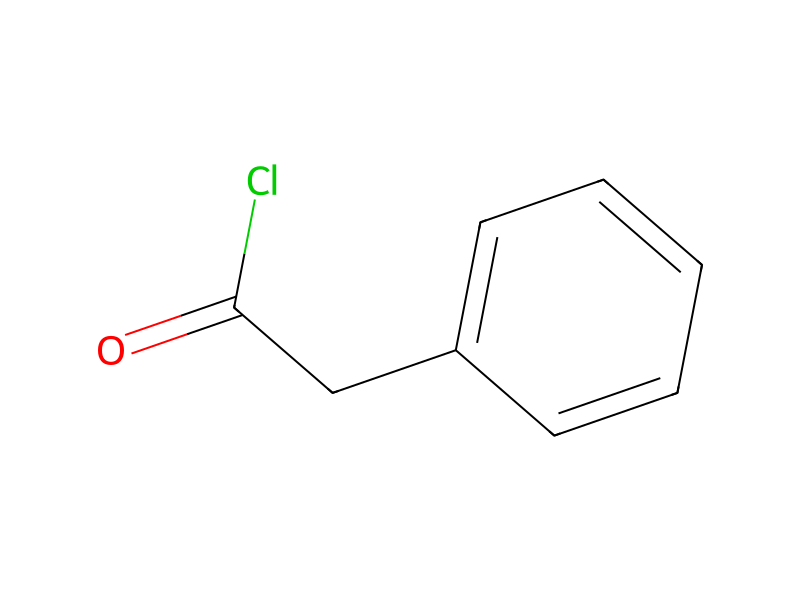

Product 1

Reagents, catalysts & solvents 1

Procedure
To a stirred solution of 58 parts of ethyl 4-[(4-chlorophenyl)amino]-1-piperidinecarboxylate in 240 parts of benzene is added dropwise a solution of 46.2 parts of benzeneacetyl chloride in 80 parts of benzene at a temperature between 40°-70° C. Upon completion, the whole is stirred and refluxed for 6 h. 15. The reaction mixture is cooled and filtered. The filtrate is washed successively with water, sodium hydrogen carbonate solution and water, then dried and evaporated in vacuo. The residue is crystallized from 1,1'-oxybisethane, yielding 47 parts of ethyl 4-[N-(4-chlorophenyl)-N-(phenylacetyl)amino]-1-piperidinecarboxylate; mp. 108° C.