HomeMCPSkillsWorkbenchOpenChem
HomeWorkbenchNotificationsMe
llms.txt · skill.md · MCP GuidePrivacy Policy · Terms of Service · Supportv1.8.5
  1. Home
  2. /Reaction

6-Bromopyridine-2-carbaldehyde → 6-{2-[(Mesitylamino)methyl]-1-naphthyl}pyridine-2-carbaldehyde

HRID 2370667
Print

Reaction equation

Br[C:2]1[N:7]=[C:6]([CH:8]=[O:9])[CH:5]=[CH:4][CH:3]=1.[CH3:10][C:11]1[CH:37]=[C:36]([CH3:38])[CH:35]=[C:34]([CH3:39])[C:12]=1[NH:13][CH2:14][C:15]1[CH:24]=[CH:23][C:22]2[C:17](=[CH:18][CH:19]=[CH:20][CH:21]=2)[C:16]=1B1OC(C)(C)C(C)(C)O1.ClCCl.C(OCC)(=O)C>CO.O.C1(C)C=CC=CC=1.C1C=CC([P]([Pd]([P](C2C=CC=CC=2)(C2C=CC=CC=2)C2C=CC=CC=2)([P](C2C=CC=CC=2)(C2C=CC=CC=2)C2C=CC=CC=2)[P](C2C=CC=CC=2)(C2C=CC=CC=2)C2C=CC=CC=2)(C2C=CC=CC=2)C2C=CC=CC=2)=CC=1>[C:11]1([CH3:10])[CH:37]=[C:36]([CH3:38])[CH:35]=[C:34]([CH3:39])[C:12]=1[NH:13][CH2:14][C:15]1[CH:24]=[CH:23][C:22]2[C:17](=[CH:18][CH:19]=[CH:20][CH:21]=2)[C:16]=1[C:2]1[N:7]=[C:6]([CH:8]=[O:9])[CH:5]=[CH:4][CH:3]=1
ParticipantsProcedureWorkupSources & evidenceReaction notes

Participants

8

Reactant 3

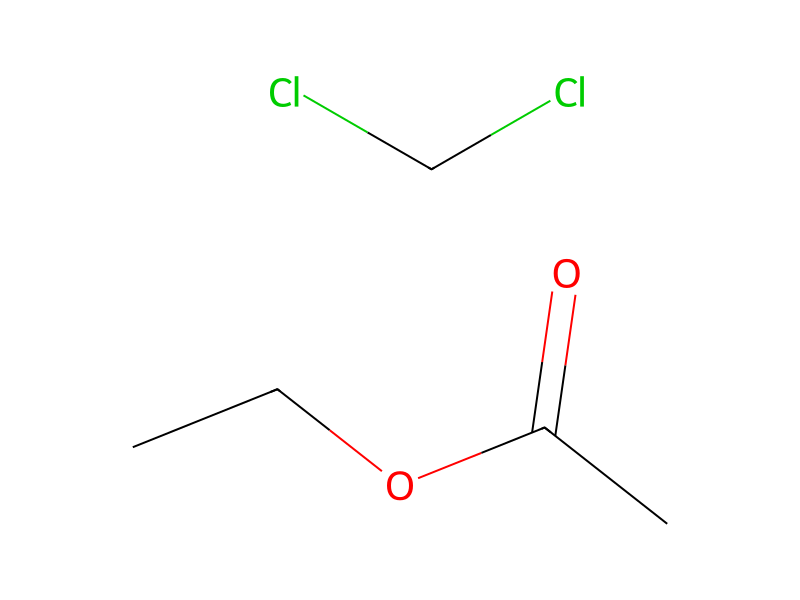
HCID 27570096-Bromopyridine-2-carbaldehydeHCID 21226138Dichloromethane ethylacetateHCID 667957632,4,6-Trimethyl-N-{[1-(4,4,5,5-tetramethyl-1,3,2-dioxaborolan-2-yl)-2-naphthyl]methyl}aniline

Product 1

HCID 866601036-{2-[(Mesitylamino)methyl]-1-naphthyl}pyridine-2-carbaldehyde

Reagents, catalysts & solvents 4

HCID 178418397
HCID 178418397, compound
Catalyst
HCID 887MethanolSolvent
HCID 962WaterSolvent
HCID 1140TolueneSolvent

Procedure

A solution of 32.4 g (113 mmol) of Na2CO3(H2O)10 in a mixture of 180 ml of methanol and 600 ml of water was added to a mixture of 8.37 g (45.0 mmol) of 6-bromopyridine-2-carbaldehyde, 18.1 g (45.0 mmol) of 2,4,6-trimethyl-N-{[1-(4,4,5,5-tetramethyl-1,3,2-dioxaborolan-2-yl)-2-naphthyl]methyl}aniline and 2.65 g (2.30 mmol) of Pd(PPh3)4 in 600 ml of toluene by vigorous stirring at room temperature. The resulting mixture was stirred at 80° C. for 12 h. Thereafter, this mixture was cooled to room temperature, the organic layer was separated, dried over MgSO4, and then evaporated to dryness. The product was isolated by flash chromatography on silica gel 60 (40-63 um; eluent: dichloromethane-ethyl acetate=100:1 and then 10:1, vol.). Yield 10.7 g (63%). Anal. calc. for C26H24N2O: C, 82.07; H, 6.36; N, 7.36. Found: C, 82.24; H, 6.49; N, 7.18. 1H NMR (CDCl3): 10.12 (s, 1H, CHO), 8.06 (m, 1H, 3-H in Py), 7.90-7.99 (m, 3H, 5,7,8-H in naphthyl), 7.63 (d, J=8.3 Hz, 4-H in naphthyl), 7.54 (m, 1H, 5-H in Py), 7.49 (m, 1H, 4-H in Py), 7.39 (m, 1H, 6-H in naphthyl), 7.28 (d, J=8.3 Hz, 3-H in naphthyl), 6.74 (s, 2H, 3,5-H in mesityl), 3.98 (d, J=13.1 Hz, 1H, CHH′N), 3.89 (d, J=13.1 Hz, 1H, CHH′N), 3.37 (br.s, 1H, NH), 2.20 (s, 3H, 4-Me in mesityl), 2.04 (s, 6H, 2,6-Me in mesityl).

Workup

  1. stirringThe resulting mixture was stirred at 80° C. for 12 h
  2. temperatureThereafter, this mixture was cooled to room temperature
  3. customthe organic layer was separated
  4. dry with materialdried over MgSO4
  5. customevaporated to dryness
  6. customThe product was isolated by flash chromatography on silica gel 60 (40-63 um

Sources & evidence

ORD record
ord-be96d279161f455eaa017a87f31c7e49
Source dataset
uspto-grants-2014_04
DOI
10.6084/m9.figshare.5104873.v1
Patent number
US08710163B2

Reaction notes

On this pageParticipantsProcedureWorkupSources & evidenceReaction notes